Lot 690
F. Petrarca, De remediis utriusque fortune. Ohne Druckort und -datum (Heidelberg 1490).
Estimate
€ 5.000
Starting Price
€ 3.500
Hammer Price
€ 3.600
Lot:
690
Category:
Old prints up to 1600
Author:
Francesco Petrarca
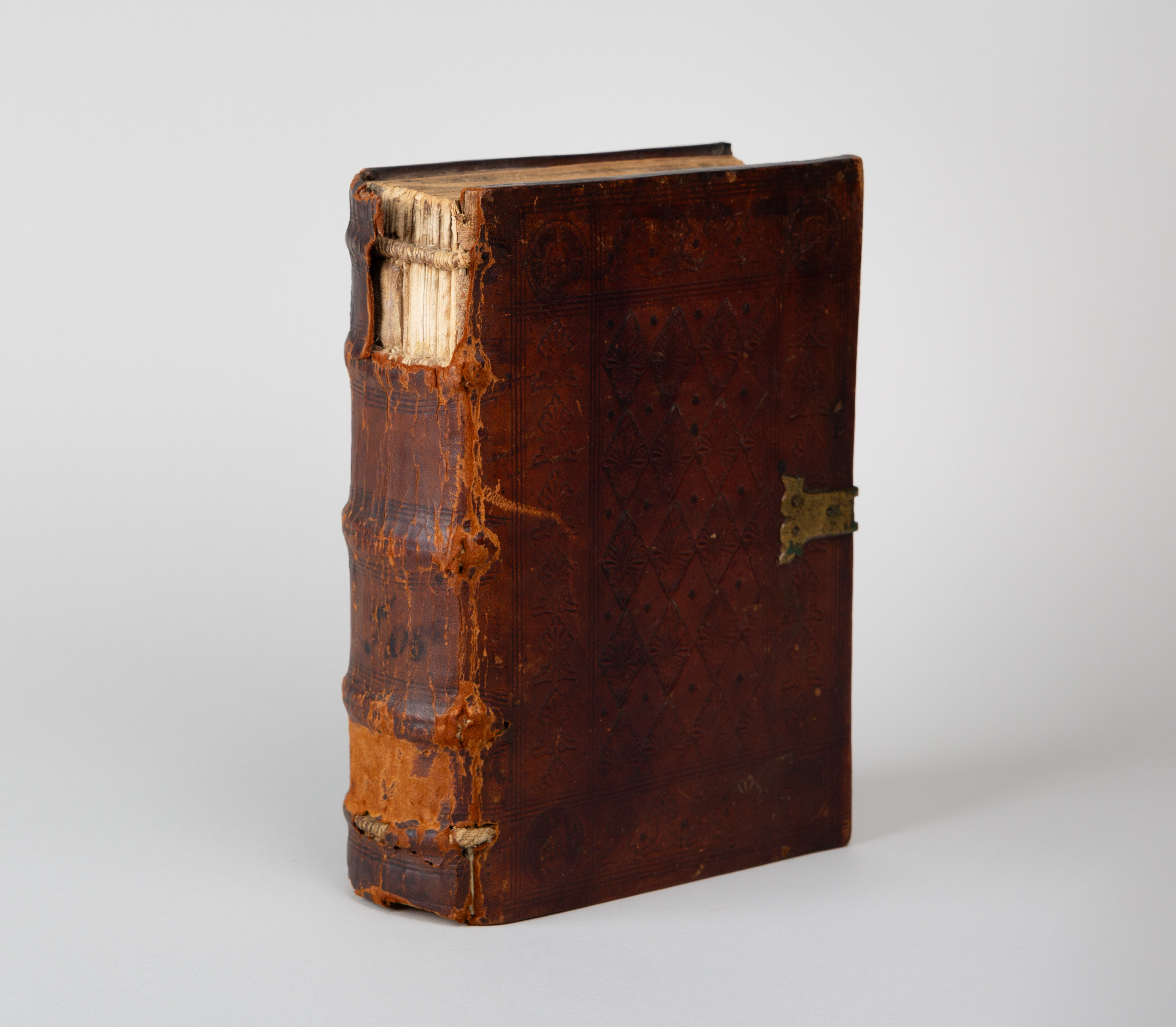
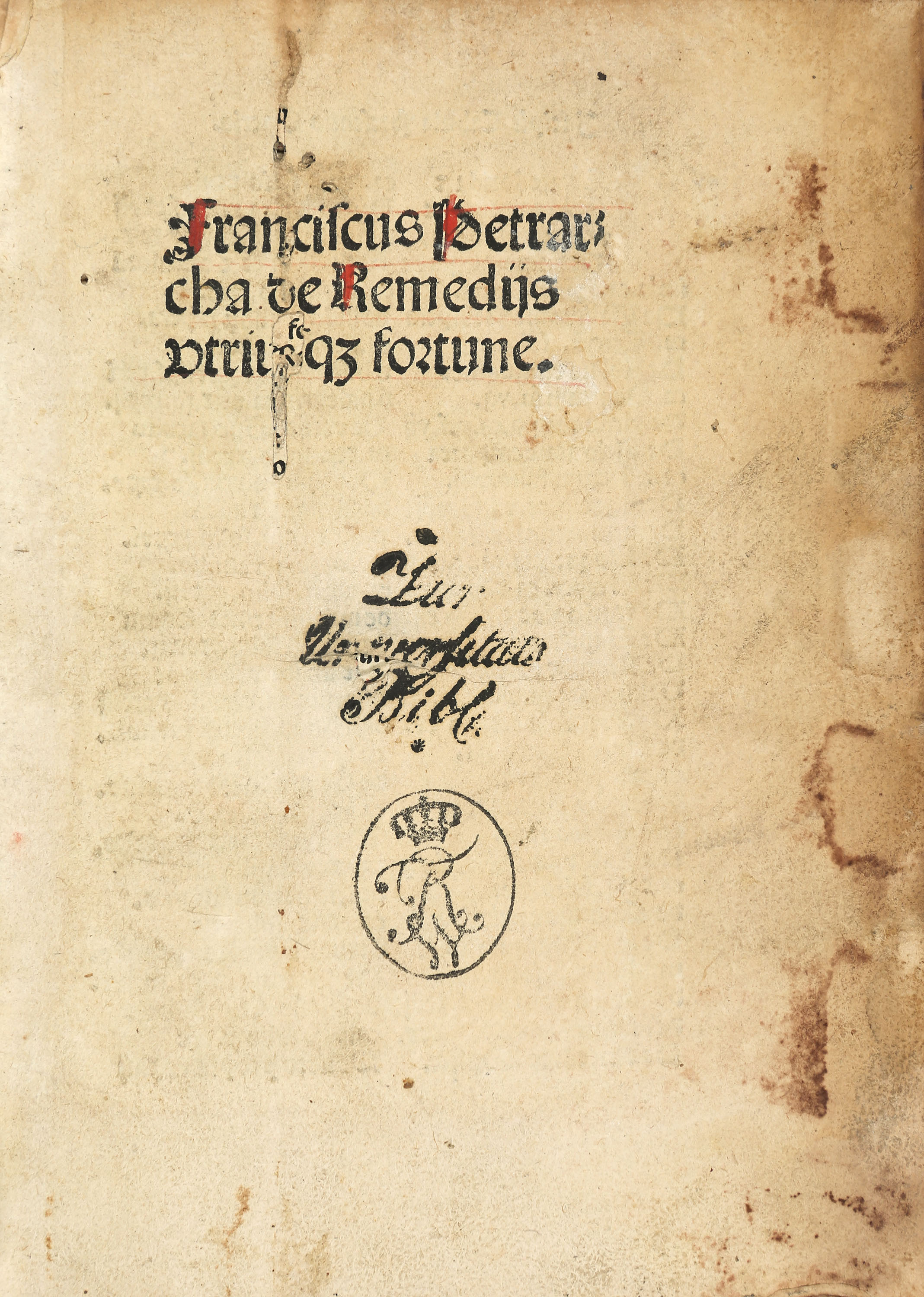
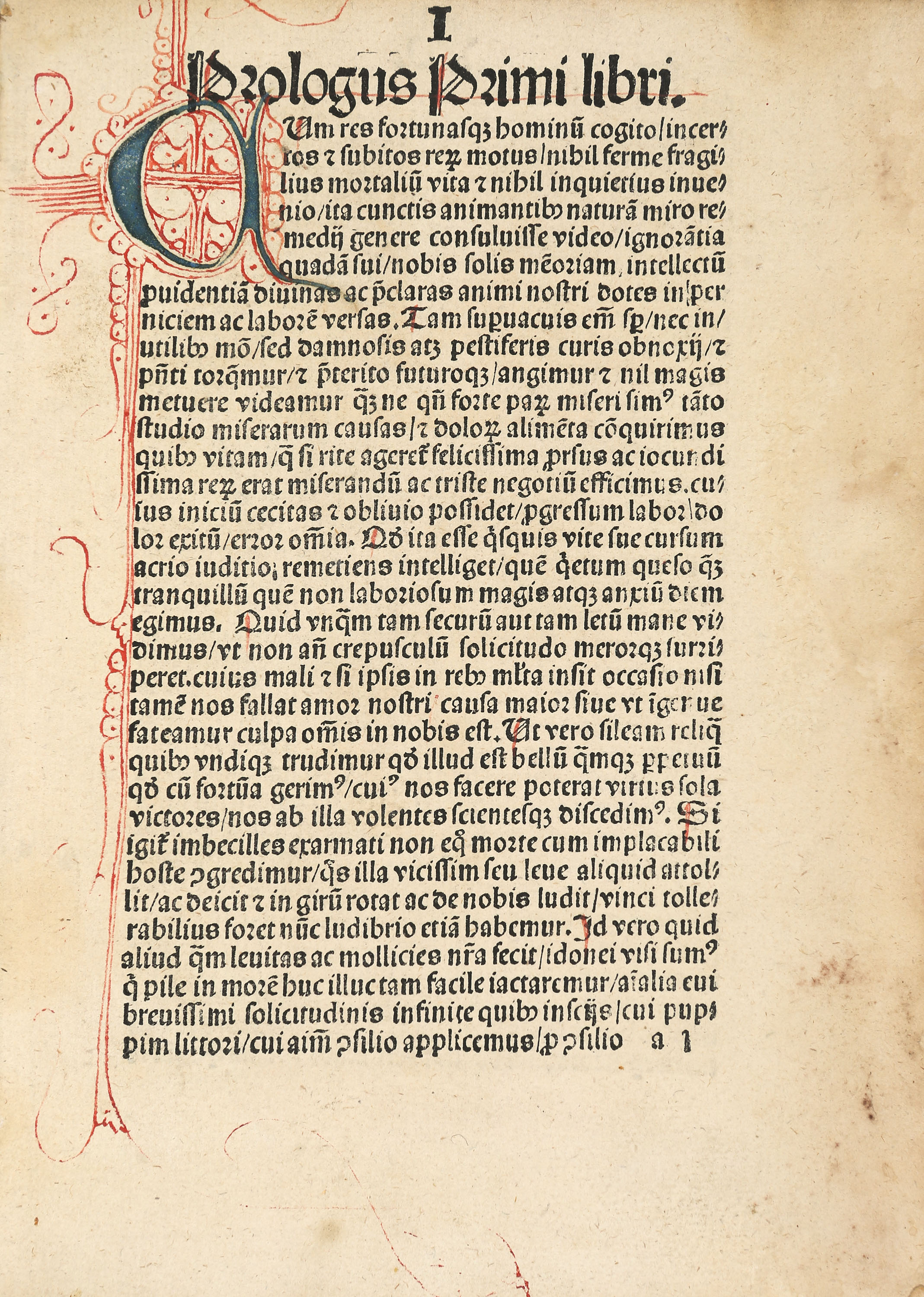
Petrarca, Francesco: De remediis utriusq(ue) fortune. Ohne Druckvermerk (Heidelberg: Heinrich Knoblochtzer, nicht nach 1490). 19 x 14,2 cm. 4 unnumbered pages, CXII, CXXX numbered leaves (sheets: unsigned ⁴, a–c⁸, d⁴, e–g⁸, h⁴, i–l⁸, m⁴, n–p⁸, q⁴, r–t⁸, v⁴, x–z⁸, A⁴, B–D⁸, E⁴, F–G⁸, H⁴, I⁸, K⁴, L⁸, M⁶). Headings throughout and decorated with simple red and blue initials. The beginning of the prologue features a large initial ‘C’ with thread-like extensions in red ink. Blind-embossed leather on five bands over wooden covers, featuring a fragment of a clasp.
(Corners and edges rubbed; spine covering with missing sections; remnants of a signature label on the lower spine. Front spine joint broken. Clasp missing. Book edges with ink signatures. Book block trimmed slightly at the top edge. Endpaper with crossed-out signature numbers. Title page detached from the upper binding, stained, with wormholes and loss of letters on both sides. Title page bearing the stamps of the Königsberg University Library and Frederick William III. The first two leaves following the title page have a small wormhole in the text block. Page o² has a tear, a small patch in the top margin and a handwritten addition to the folio number. Browned, with damp edges and spore stains along the outer margin. Worm-eaten in places, with age spots and small paper defects. A few marginal notes in brown ink at the beginning.)
BM STC, German Books, S. 685. BSB-Ink. P-263. Goff P-408. GW M31621. Hain 12791. Poulain 3064. Speck/Neumann 21. - A rare second edition of the *Trostspiegel*, first published in Strasbourg around 1474, presumably by Heinrich Eggestein. In this moral-philosophical dialogue, Petrarch discusses the ‘remedies’ for the vicissitudes of fortune and misfortune. Written in the 14th century, the work is one of Petrarch’s most influential writings and combines ancient Stoic and Christian ethics with a poignant reflection on the transience of human life. This edition is attributed to the Heidelberg printer Heinrich Knoblochtzer and was produced no later than around 1490. Knoblochtzer, one of the leading incunabula printers on the Upper Rhine, was particularly renowned for his typographically sophisticated and lavishly illustrated prints.
(Corners and edges rubbed; spine covering with missing sections; remnants of a signature label on the lower spine. Front spine joint broken. Clasp missing. Book edges with ink signatures. Book block trimmed slightly at the top edge. Endpaper with crossed-out signature numbers. Title page detached from the upper binding, stained, with wormholes and loss of letters on both sides. Title page bearing the stamps of the Königsberg University Library and Frederick William III. The first two leaves following the title page have a small wormhole in the text block. Page o² has a tear, a small patch in the top margin and a handwritten addition to the folio number. Browned, with damp edges and spore stains along the outer margin. Worm-eaten in places, with age spots and small paper defects. A few marginal notes in brown ink at the beginning.)
BM STC, German Books, S. 685. BSB-Ink. P-263. Goff P-408. GW M31621. Hain 12791. Poulain 3064. Speck/Neumann 21. - A rare second edition of the *Trostspiegel*, first published in Strasbourg around 1474, presumably by Heinrich Eggestein. In this moral-philosophical dialogue, Petrarch discusses the ‘remedies’ for the vicissitudes of fortune and misfortune. Written in the 14th century, the work is one of Petrarch’s most influential writings and combines ancient Stoic and Christian ethics with a poignant reflection on the transience of human life. This edition is attributed to the Heidelberg printer Heinrich Knoblochtzer and was produced no later than around 1490. Knoblochtzer, one of the leading incunabula printers on the Upper Rhine, was particularly renowned for his typographically sophisticated and lavishly illustrated prints.