Lot 688
C. Paradin, Devises heroiques. Lyon 1557.
Estimate
€ 900
Starting Price
€ 600
Hammer Price
€ 1.000
Lot:
688
Category:
Old prints up to 1600
Author:
Claude Paradin
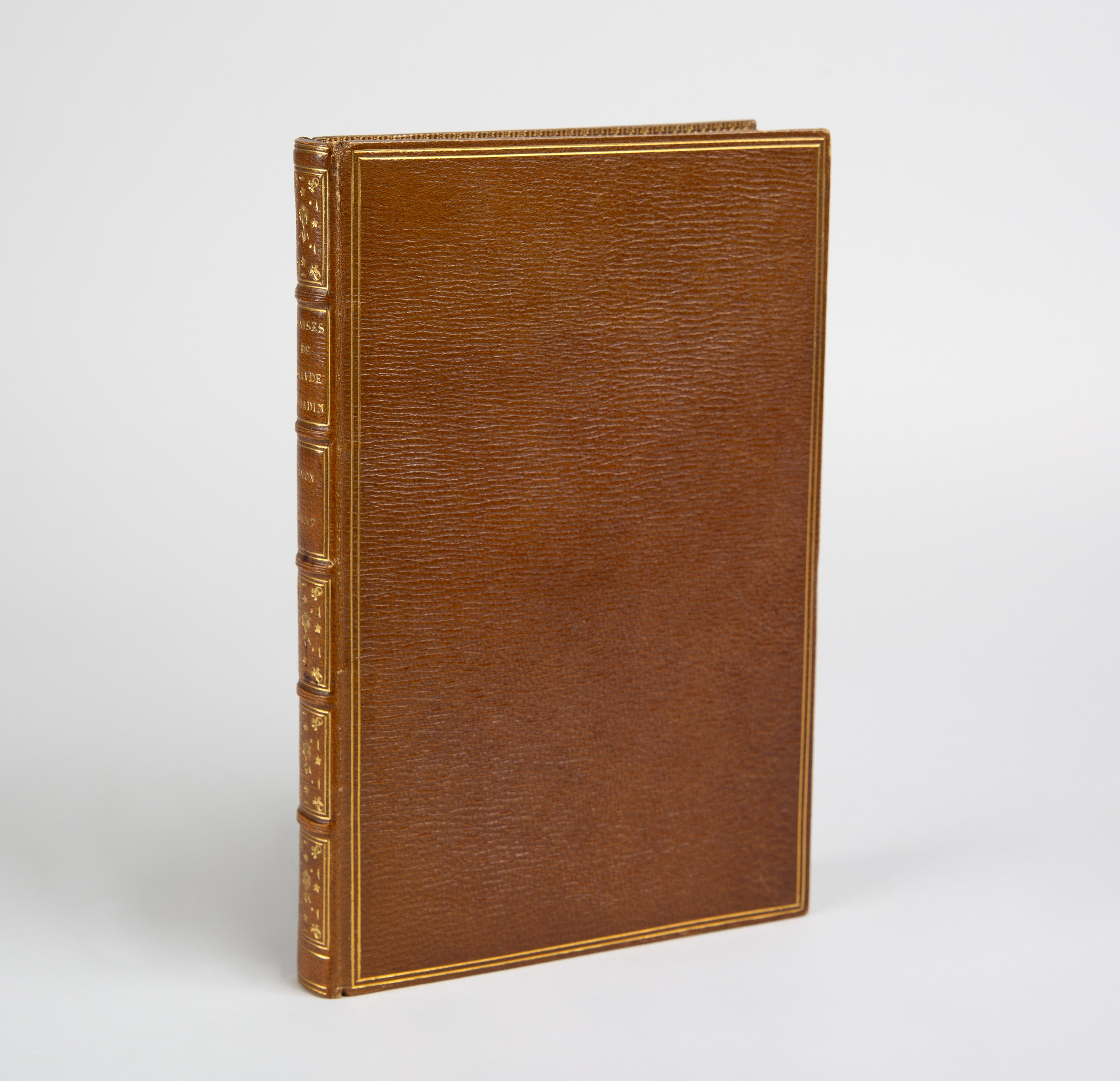
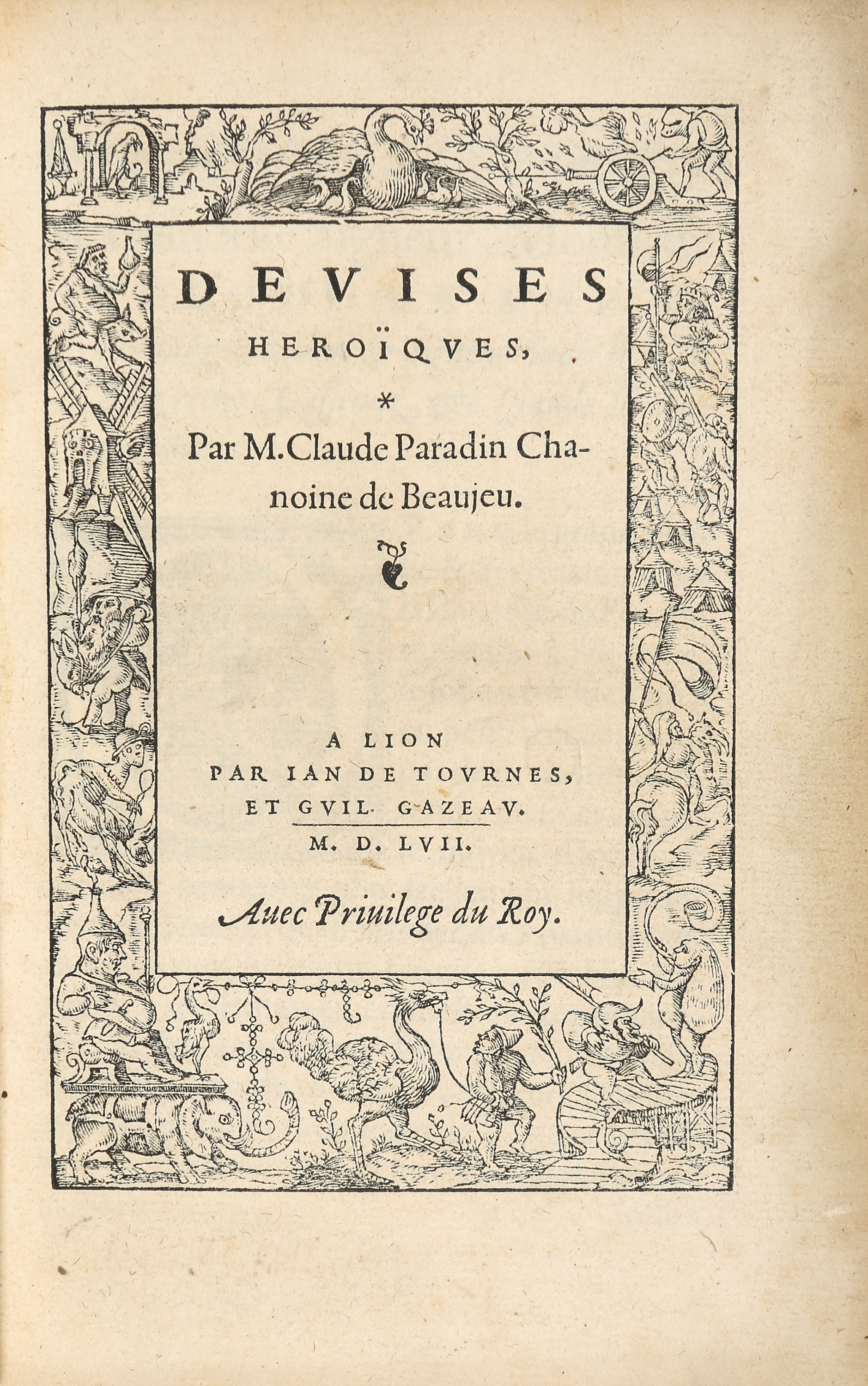
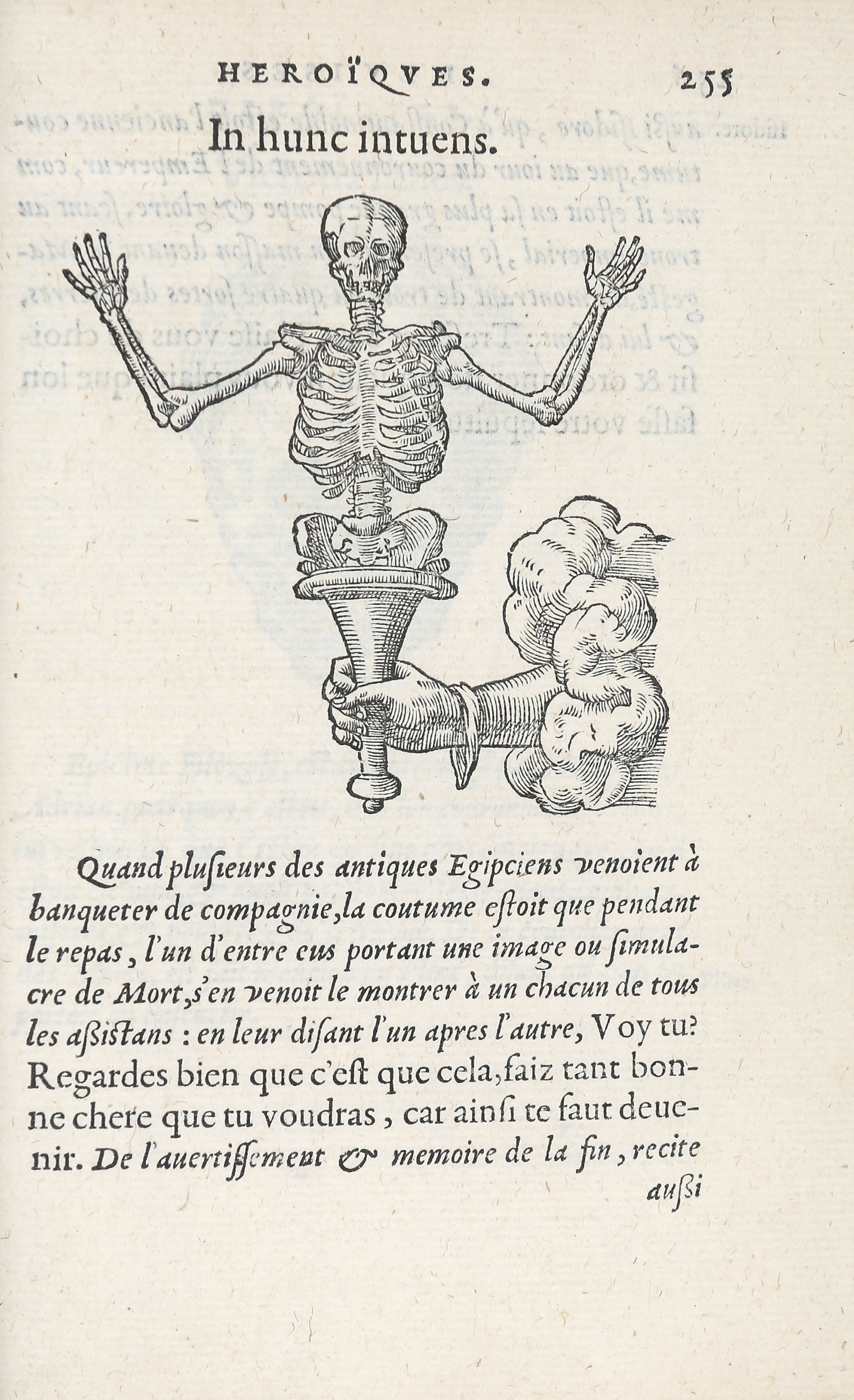
Paradin, Claude: Devises heroïques. Lyon: Jean de Tournes and Guillaume Gazeau 1557. 17,2 x 11,3 cm. With a woodcut title border and 182 woodcut illustrations by Bernard Salomon. 261 pp. Light brown morocco leather with gold-stamped cover fillets, gold-gilded inner edges, a title on the spine, and gold gilding on the spine, with the bookbinder’s stamped signature “Thompson” on the flyleaf.
(Corners and edges show minimal wear. Pages a⁴ through b² have marginal notes in pencil by a more recent hand along the bottom margin; other pages have marginal notes in brown ink by an older hand along the top margin. Slight age spots. Bookplate on the front endpaper.)
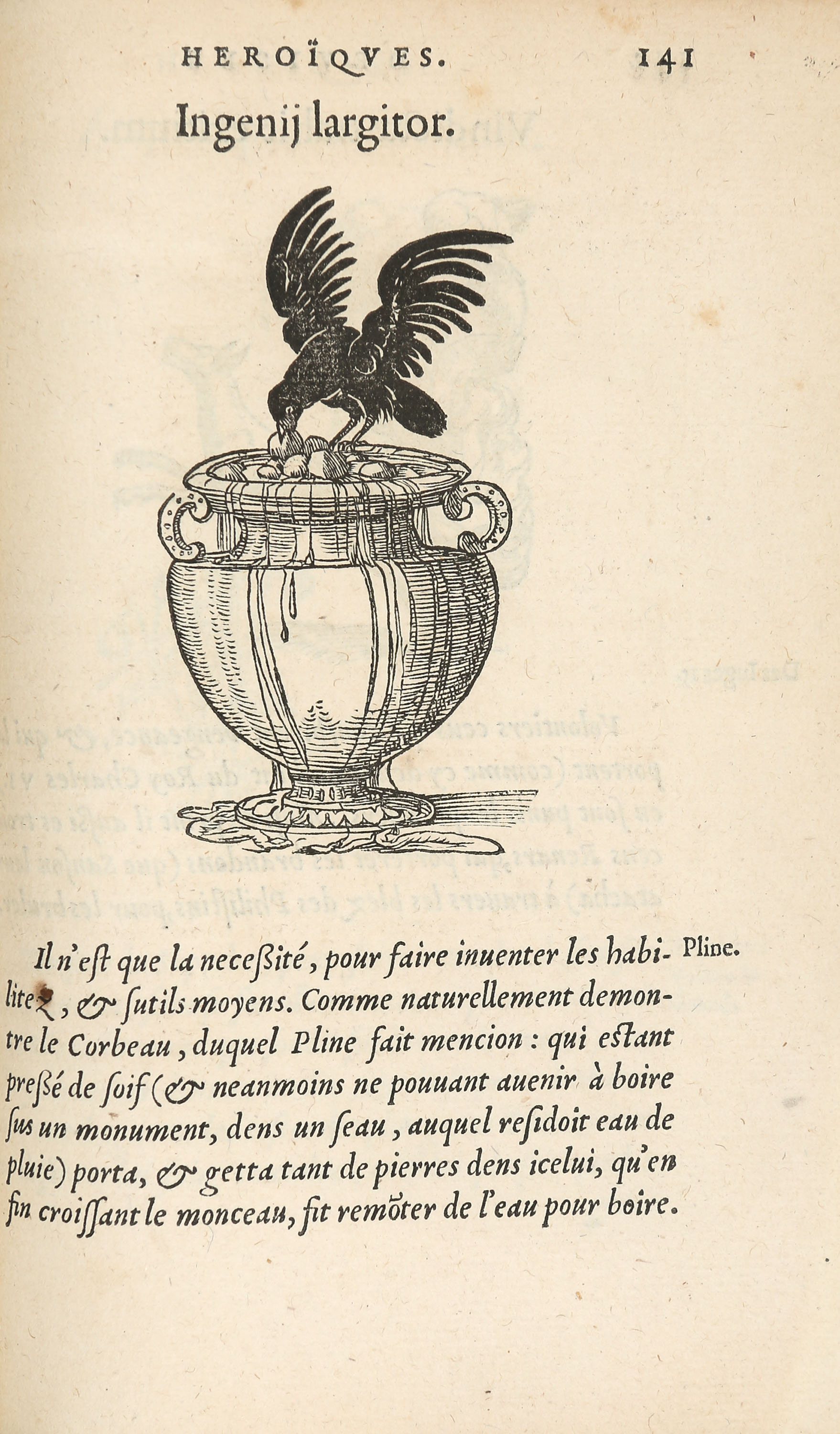
Adams P 291. Landwehr, Romanic Emblem Books, 564. Parz, S. 444. - Second edition, expanded to include 64 woodcuts and a French explanatory text. - “The first Protestant collection of religious devices, a book that played a very important role in the European emblem tradition” (Landwehr). “A very important source of inspiration for printer’s marks” (Landwehr). - One of the most important books of emblems. Conceived as a compendium of symbols, this collection brings together emblems—each consisting of a motto, a woodcut, and an explanatory text—whose symbolism draws on the Bible, ancient imagery, and mottos of kings and historical figures. Such emblems served as markers of sovereignty, social status, or moral identity, but were also used as decorative motifs in heraldry, architecture, printmaking, textile art, or as printer’s marks. Through its widespread circulation and later expansions—such as those by Plantin—Paradin’s work contributed significantly to the popularization of emblematic imagery and established itself as a fundamental reference and pattern book of early modern symbolism. - Among the prominent figures who were familiar with the work of the French historian, genealogist, and emblem collector Claude Paradin (1510–1573) and who drew upon his emblems was Mary Stuart, who used the emblem *Ingenii largitor* (reproduced here on p. 141) in her tapestries.
(Corners and edges show minimal wear. Pages a⁴ through b² have marginal notes in pencil by a more recent hand along the bottom margin; other pages have marginal notes in brown ink by an older hand along the top margin. Slight age spots. Bookplate on the front endpaper.)
Adams P 291. Landwehr, Romanic Emblem Books, 564. Parz, S. 444. - Second edition, expanded to include 64 woodcuts and a French explanatory text. - “The first Protestant collection of religious devices, a book that played a very important role in the European emblem tradition” (Landwehr). “A very important source of inspiration for printer’s marks” (Landwehr). - One of the most important books of emblems. Conceived as a compendium of symbols, this collection brings together emblems—each consisting of a motto, a woodcut, and an explanatory text—whose symbolism draws on the Bible, ancient imagery, and mottos of kings and historical figures. Such emblems served as markers of sovereignty, social status, or moral identity, but were also used as decorative motifs in heraldry, architecture, printmaking, textile art, or as printer’s marks. Through its widespread circulation and later expansions—such as those by Plantin—Paradin’s work contributed significantly to the popularization of emblematic imagery and established itself as a fundamental reference and pattern book of early modern symbolism. - Among the prominent figures who were familiar with the work of the French historian, genealogist, and emblem collector Claude Paradin (1510–1573) and who drew upon his emblems was Mary Stuart, who used the emblem *Ingenii largitor* (reproduced here on p. 141) in her tapestries.