Lot 687
Otto von Passau, Die vier und zwenzig alten. Straßburg 1508. - Vorgeb.: J. Geiler v. Kaysersberg, Das Buch Granatapfel. (Straßburg 1516). Fragment.
Estimate
€ 3.000
Starting Price
€ 2.000
Lot:
687
Category:
Old prints up to 1600
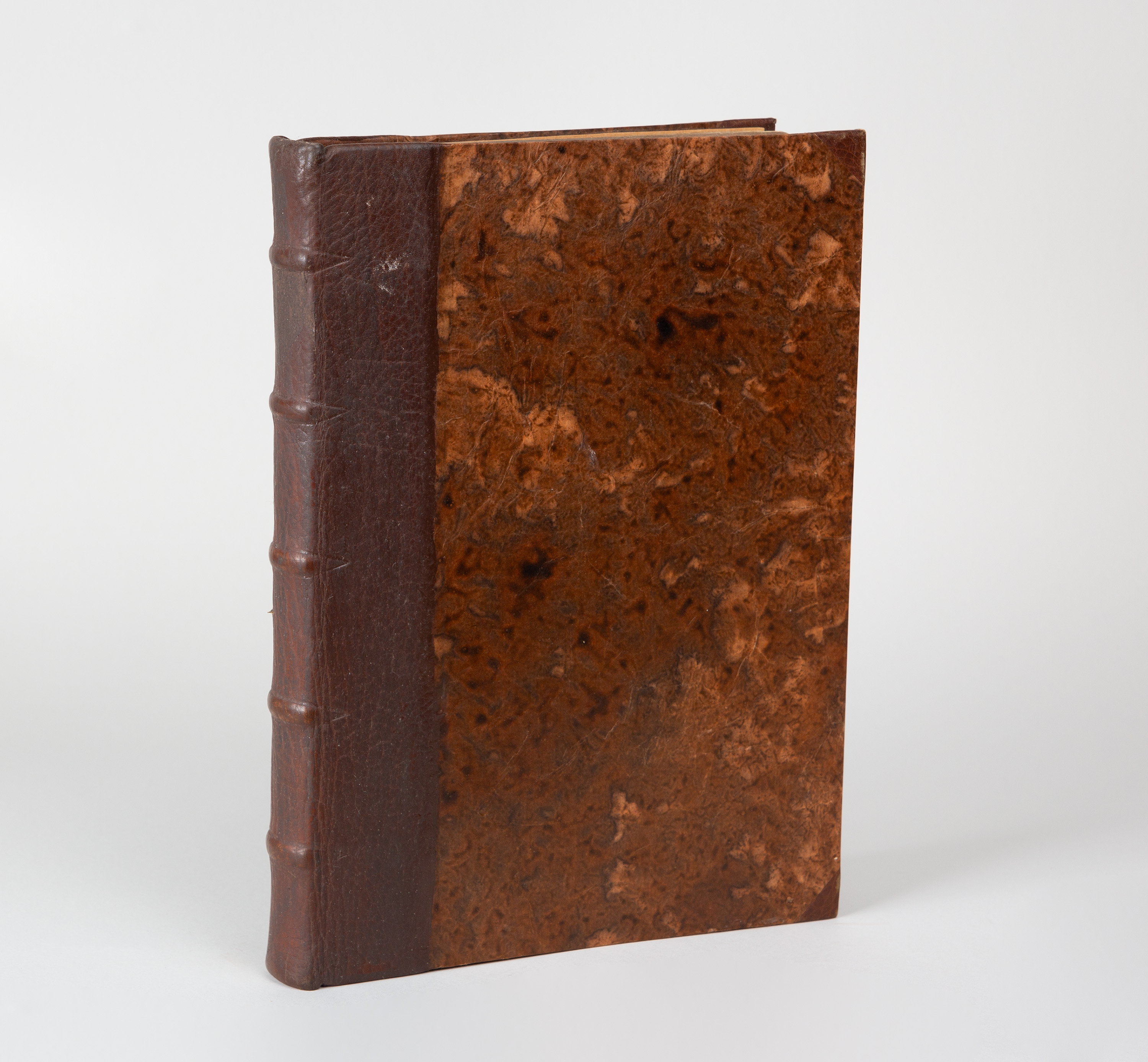
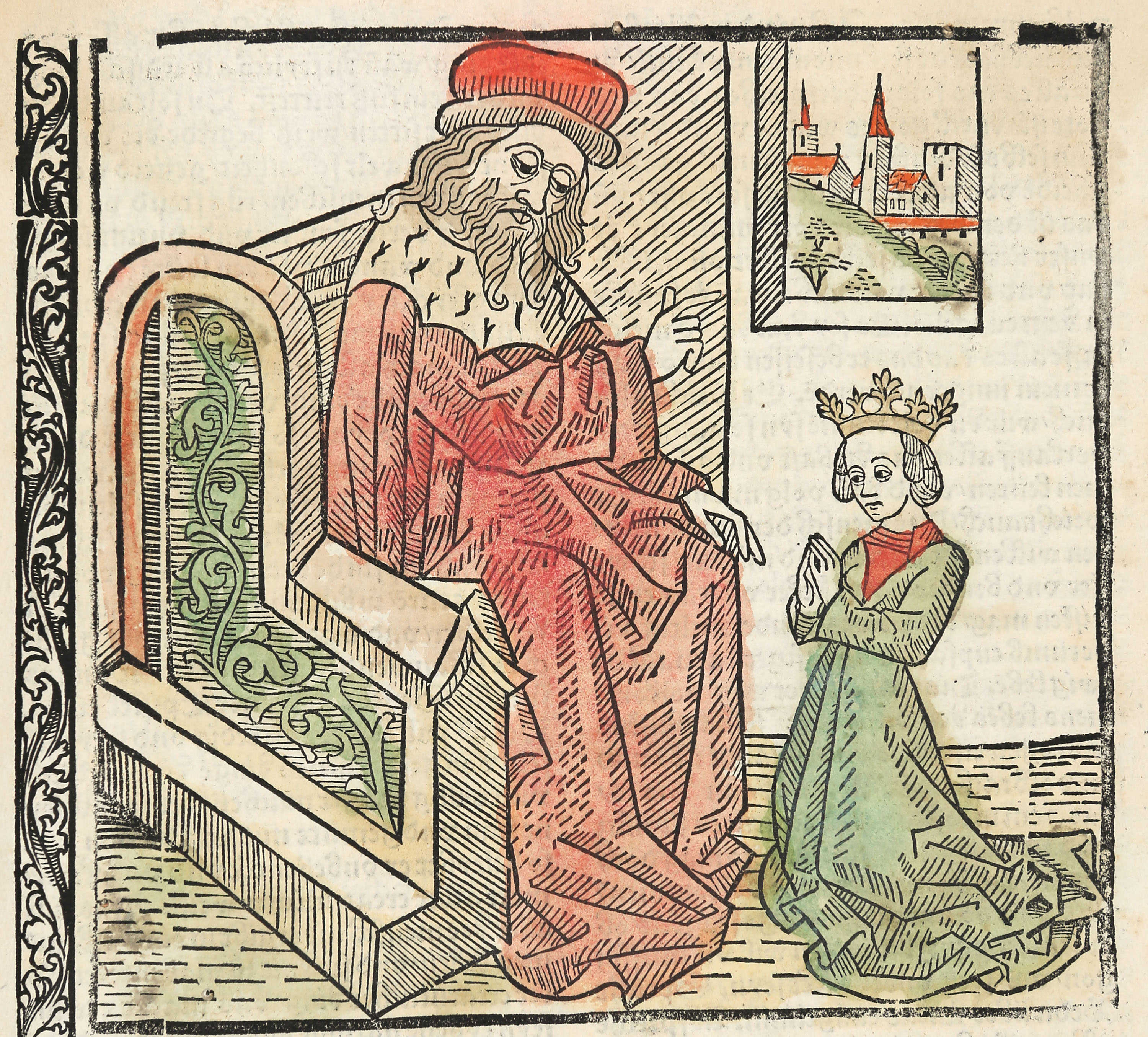
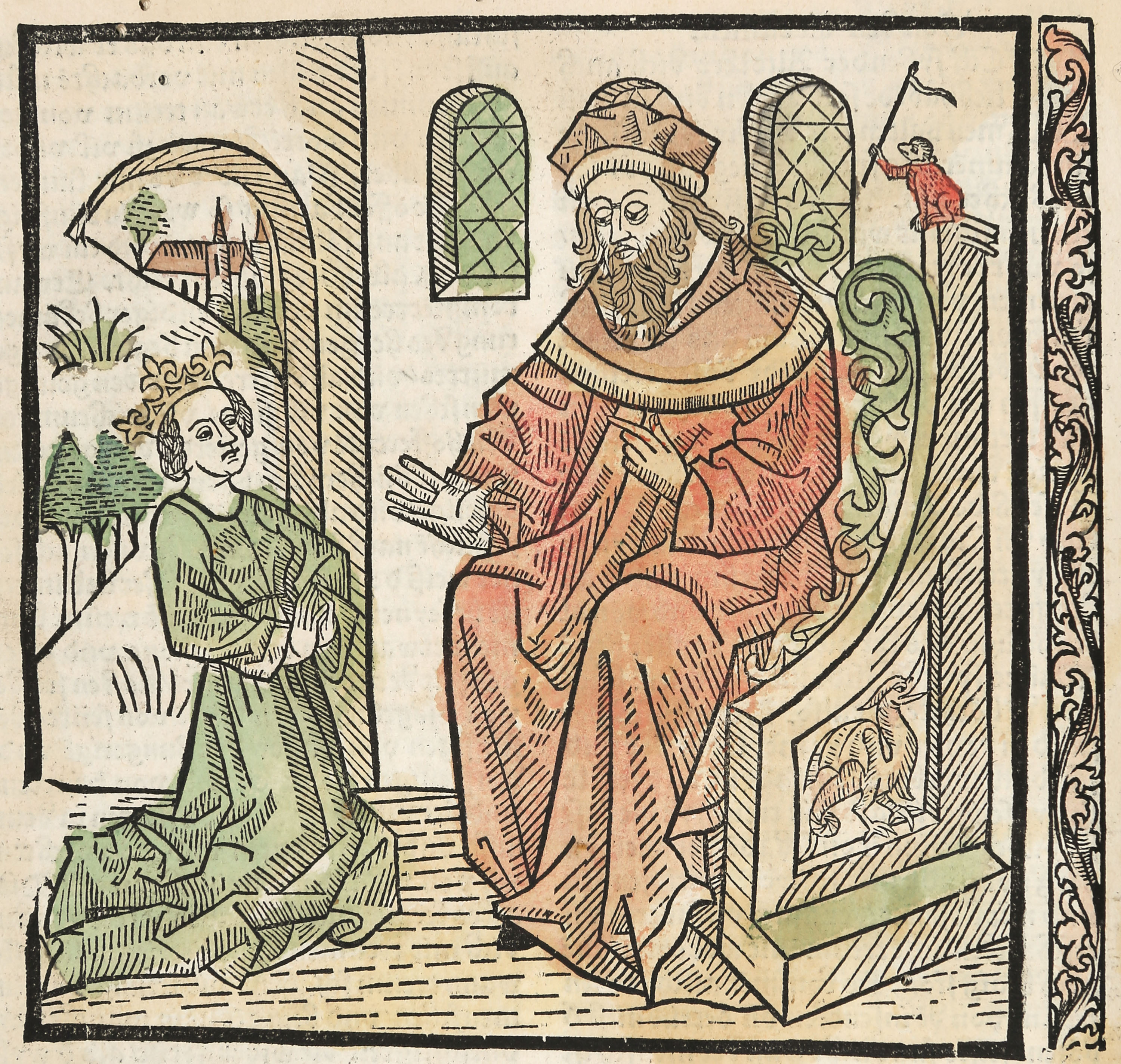
Otto von Passau: Die vier und zwenzig alten. Straßburg: Johann Knobloch 17. Februar 1508. 27,5 x 19,7 cm. Containing 20 (of 23) woodcuts in the text (repeated) and 1 (of 4) coloured woodcut initials. 96 (of 104) leaves. Modern half-leather binding.
(Slightly worn. Section A, comprising 8 leaves and containing the title woodcut and 3 text woodcuts, is missing. The first leaf of Section B bears a owner’s mark in blue ink. Section B, as well as leaves N³–O², Q⁶ and R¹, show signs of worm damage. Shown signs of worm damage, with some underlining and a few marginal notes in ink; the edges are damp and there are large water stains with brown rims almost throughout. The last leaf has been laminated to repair a large tear. The text woodcuts have been coloured. Discoloured. Ex-libris ‘Dr Fritz Eberhardt, 1964’ on the front endpaper.)
Adams O 417. Goed. I., 213, 11. Muller 120, 56. Muther 1515. VD16 O 1442. - The first 16th-century edition and, it is believed, the eighth German edition of this devotional and moral treatise, which was widely circulated in the late Middle Ages. Written in 1386 by the Franciscan monk Otto von Passau, the work has been handed down under the title ‘Das Buch vom goldenen Thron’ (The Book of the Golden Throne); it was already circulating in numerous manuscripts before it was printed and is regarded as an early attempt to make Christian asceticism accessible to a broad lay audience in the form of a generally comprehensible handbook. - This edition features two woodcut illustrations, taken from the Schott edition of 1483, which appear repeatedly throughout. For use in the present, more expansive two-column layout, the printing blocks were each extended by two endpieces and a side border. The illustrations each depict one of the 24 elders of the Apocalypse, crowned and accompanied by a female figure. She embodies Ecclesia and also symbolises the New Testament Gospel.
Bound together with:
Geiler von Kaysersberg, Johann: The Book of the Pomegranate. Known in Latin as ‘Malogranatus’. Contains a great many and varied wholesome and sweet teachings and lessons for those who are beginning, advancing and have reached perfection, together with a spiritual interpretation of the exodus of the Children of Israel from Egypt. Fragment. (Strasbourg: Johann Knobloch 1516). - 42 (of 163) folios (present: A²⁻⁸, B-F⁶, G⁵). (Without the title page and the two woodcuts. Folio A² bears a ownership mark in blue ink in the upper margin. Worm-eaten, browned and with damp-stained edges.) - VD16 G 722.
(Slightly worn. Section A, comprising 8 leaves and containing the title woodcut and 3 text woodcuts, is missing. The first leaf of Section B bears a owner’s mark in blue ink. Section B, as well as leaves N³–O², Q⁶ and R¹, show signs of worm damage. Shown signs of worm damage, with some underlining and a few marginal notes in ink; the edges are damp and there are large water stains with brown rims almost throughout. The last leaf has been laminated to repair a large tear. The text woodcuts have been coloured. Discoloured. Ex-libris ‘Dr Fritz Eberhardt, 1964’ on the front endpaper.)
Adams O 417. Goed. I., 213, 11. Muller 120, 56. Muther 1515. VD16 O 1442. - The first 16th-century edition and, it is believed, the eighth German edition of this devotional and moral treatise, which was widely circulated in the late Middle Ages. Written in 1386 by the Franciscan monk Otto von Passau, the work has been handed down under the title ‘Das Buch vom goldenen Thron’ (The Book of the Golden Throne); it was already circulating in numerous manuscripts before it was printed and is regarded as an early attempt to make Christian asceticism accessible to a broad lay audience in the form of a generally comprehensible handbook. - This edition features two woodcut illustrations, taken from the Schott edition of 1483, which appear repeatedly throughout. For use in the present, more expansive two-column layout, the printing blocks were each extended by two endpieces and a side border. The illustrations each depict one of the 24 elders of the Apocalypse, crowned and accompanied by a female figure. She embodies Ecclesia and also symbolises the New Testament Gospel.
Bound together with:
Geiler von Kaysersberg, Johann: The Book of the Pomegranate. Known in Latin as ‘Malogranatus’. Contains a great many and varied wholesome and sweet teachings and lessons for those who are beginning, advancing and have reached perfection, together with a spiritual interpretation of the exodus of the Children of Israel from Egypt. Fragment. (Strasbourg: Johann Knobloch 1516). - 42 (of 163) folios (present: A²⁻⁸, B-F⁶, G⁵). (Without the title page and the two woodcuts. Folio A² bears a ownership mark in blue ink in the upper margin. Worm-eaten, browned and with damp-stained edges.) - VD16 G 722.