Lot 223
H. Moser, Durch Central-Asien. Leipzig 1888.
Estimate
€ 200
Starting Price
€ 140
Hammer Price
€ 140
Lot:
223
Category:
Geography and work of views
Author:
Heinrich Moser
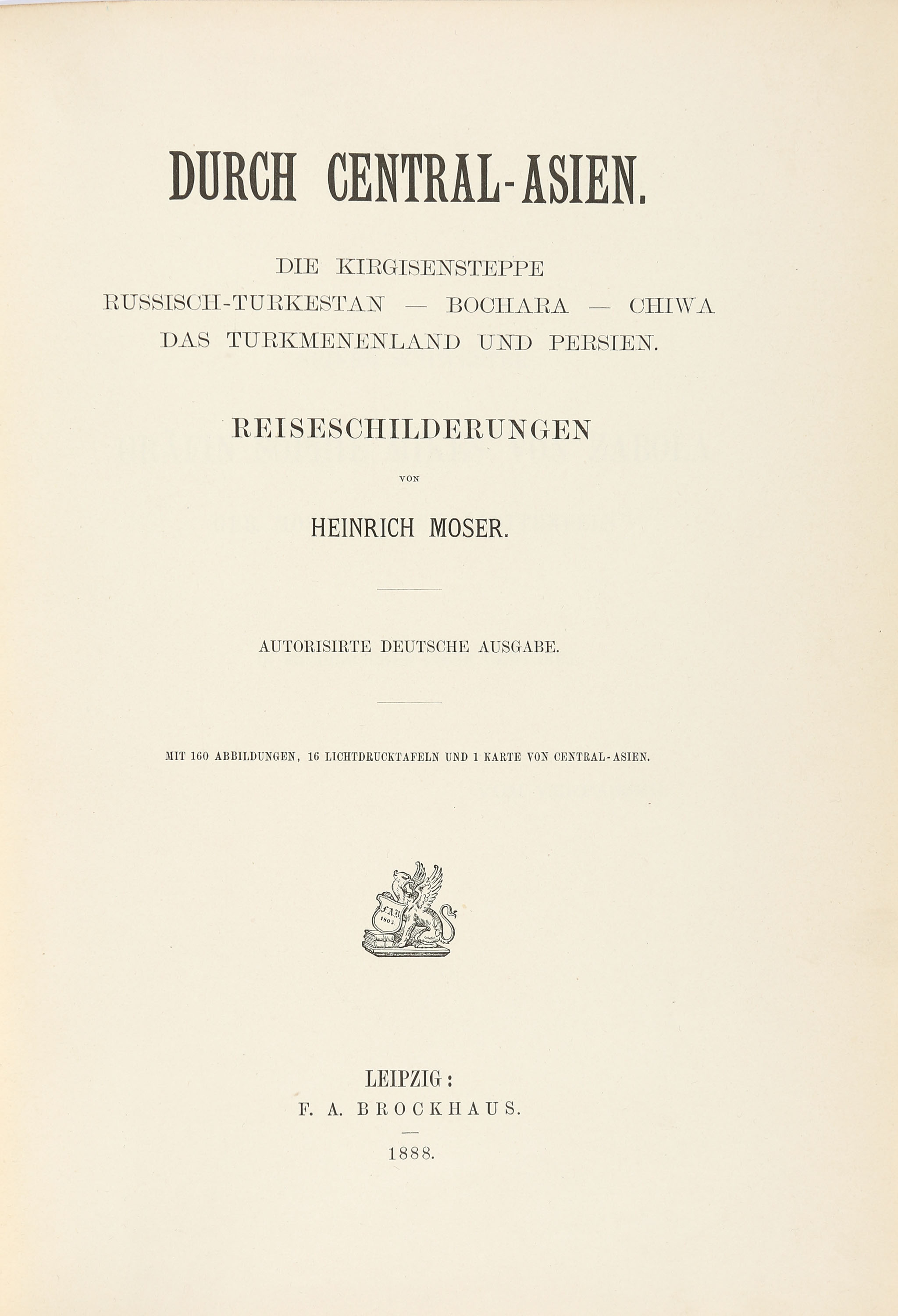
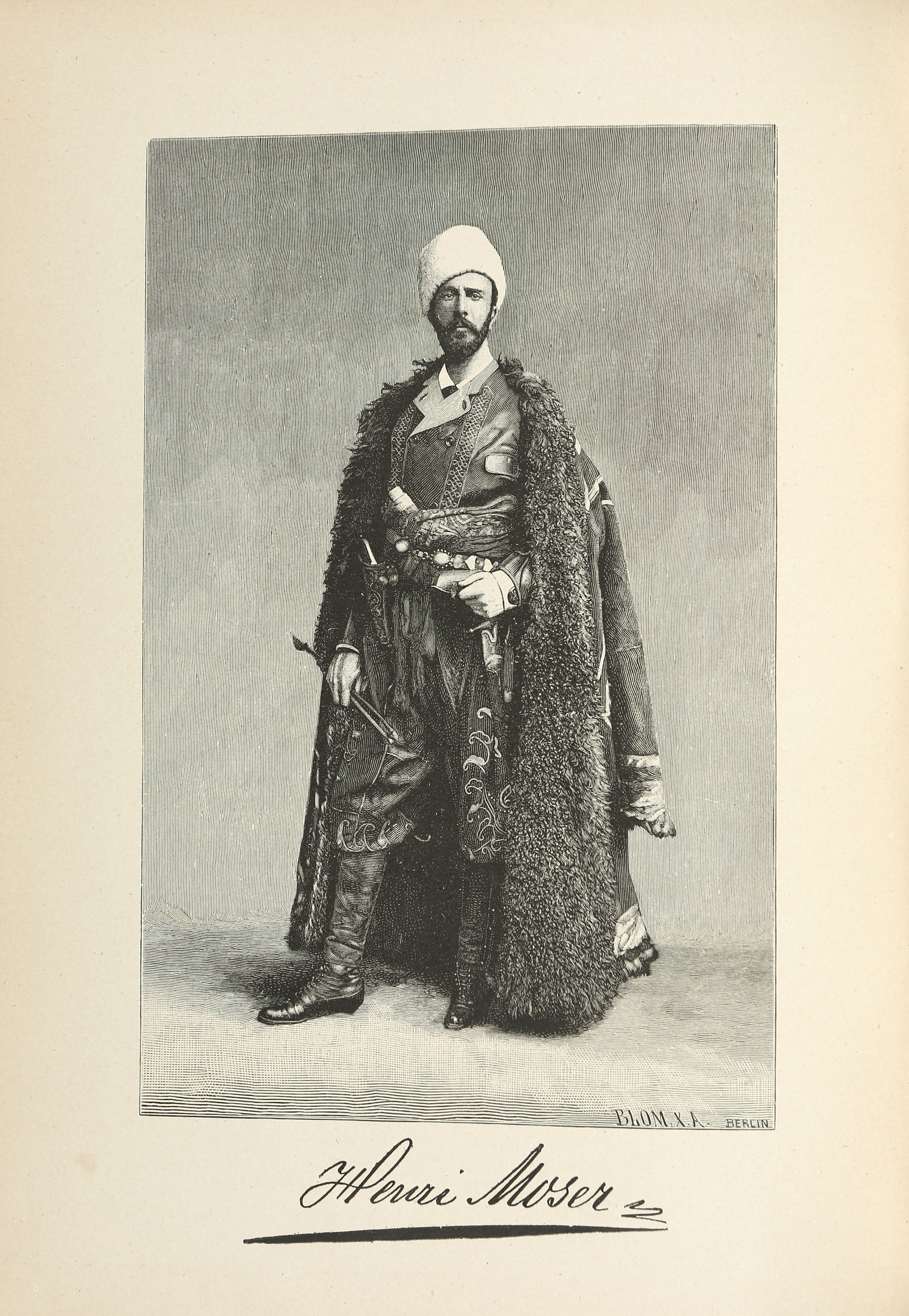
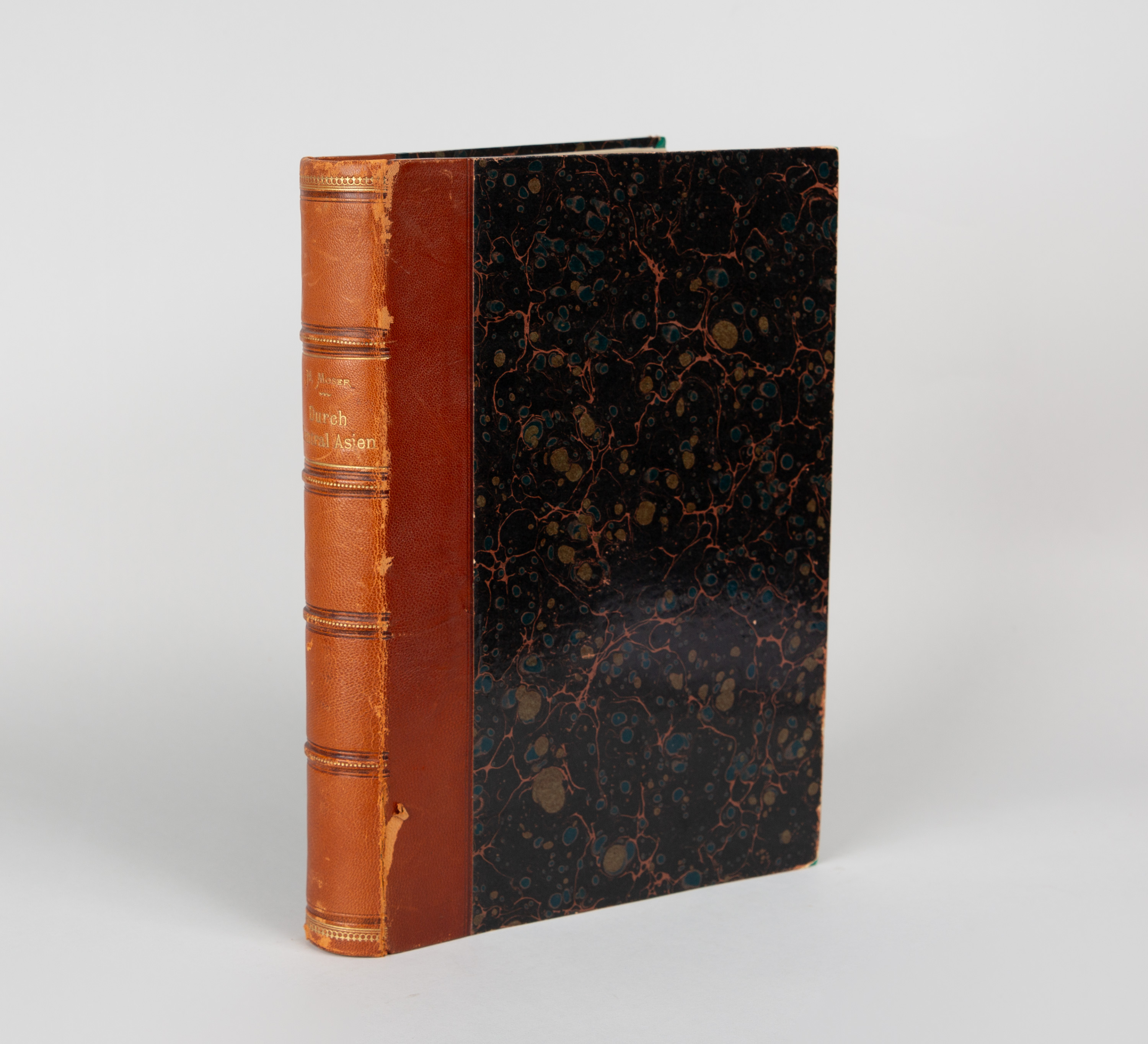
Moser, Heinrich: Durch Central-Asien. Die Kirgisensteppe, Russisch-Turkestan, Bochara, Chiwa. Das Turkmenenland und Persien. Reiseschilderungen. Leipzig: Brockhaus 1888. 26,5 x 19 cm. With frontispiece, 1 color fold-out map, 18 plates, and numerous woodcut illustrations, some of which are full-page. XI, 441 pp. Leather-bound with gold-stamped title on the spine.
(Worn; the back cover has minor damage. The half-title page bears a handwritten ownership note, “B. Keller-Rupli,” in blue ink. Pages 181–182 have a small tear at the bottom edge; the map has a tear extending into the fold. Slightly discolored.)
Henze III, 542. - First German edition. - The Swiss explorer, merchant, and art collector Heinrich Moser (1844–1923) traveled through Asia out of a spirit of adventure after breaking ties with his father, whose watch manufacturing business he had managed in Russia. During his travels, he collected a wide variety of art objects, hunting trophies, weapons, and other items, which he displayed at exhibitions throughout Europe. “He had no formal scientific training. [...] Yet his book is rich in vividly depicted scenes of daily life and is also valuable as a reflection of conditions in Turkestan as they existed immediately after the Russian occupation” (Henze). The plates, some based on photographs, feature views, portraits, and scenes of everyday life.
(Worn; the back cover has minor damage. The half-title page bears a handwritten ownership note, “B. Keller-Rupli,” in blue ink. Pages 181–182 have a small tear at the bottom edge; the map has a tear extending into the fold. Slightly discolored.)
Henze III, 542. - First German edition. - The Swiss explorer, merchant, and art collector Heinrich Moser (1844–1923) traveled through Asia out of a spirit of adventure after breaking ties with his father, whose watch manufacturing business he had managed in Russia. During his travels, he collected a wide variety of art objects, hunting trophies, weapons, and other items, which he displayed at exhibitions throughout Europe. “He had no formal scientific training. [...] Yet his book is rich in vividly depicted scenes of daily life and is also valuable as a reflection of conditions in Turkestan as they existed immediately after the Russian occupation” (Henze). The plates, some based on photographs, feature views, portraits, and scenes of everyday life.