Lot 594
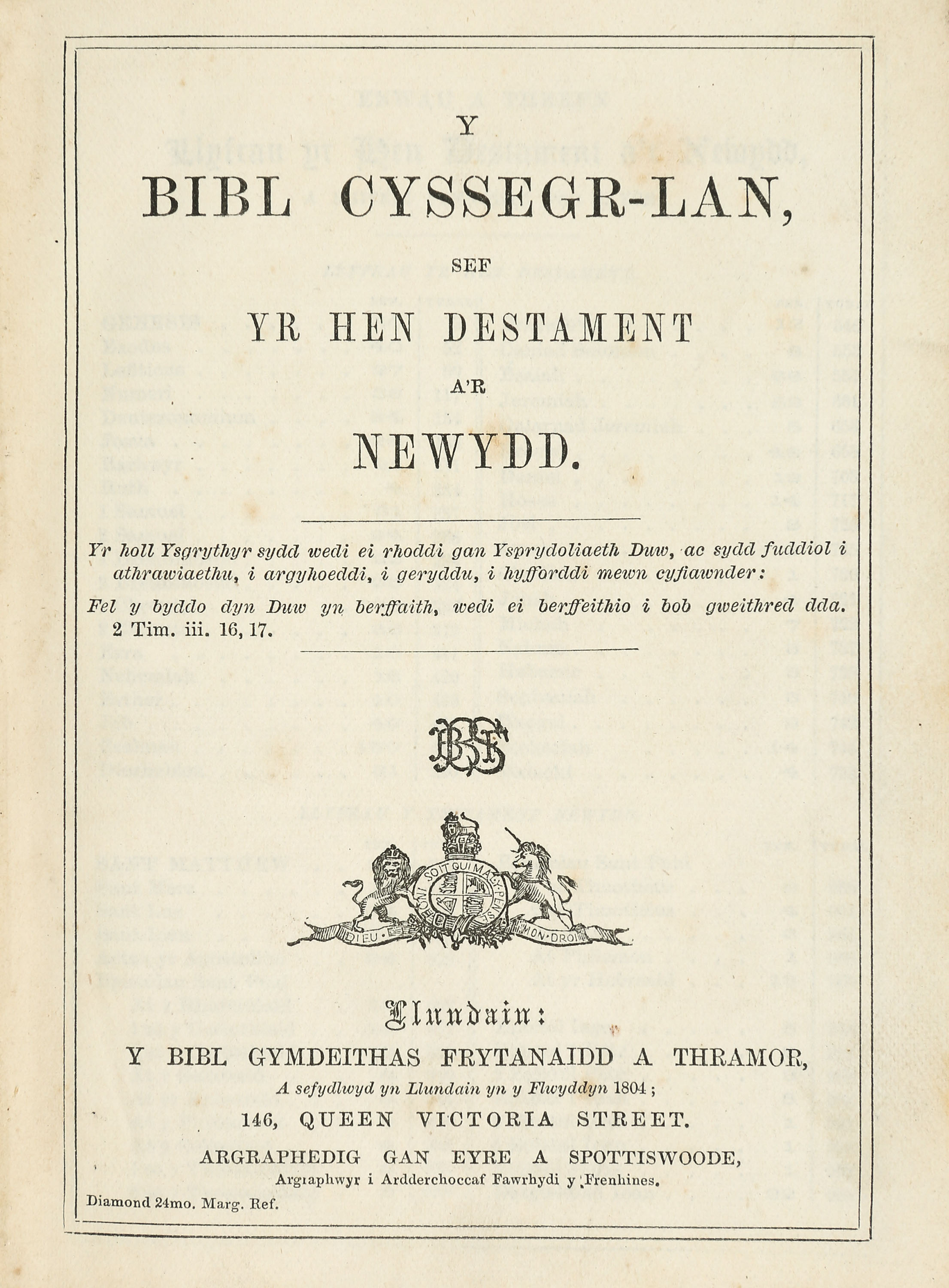
Biblia cambriana. - Y Bibl Cyssegr-lan, sef yr Hen Destament a’r Newydd. London um 1881.
Estimate
€ 300
Starting Price
€ 200
Hammer Price
€ 200
Lot:
594
Category:
History, cultural history and miscellaneous
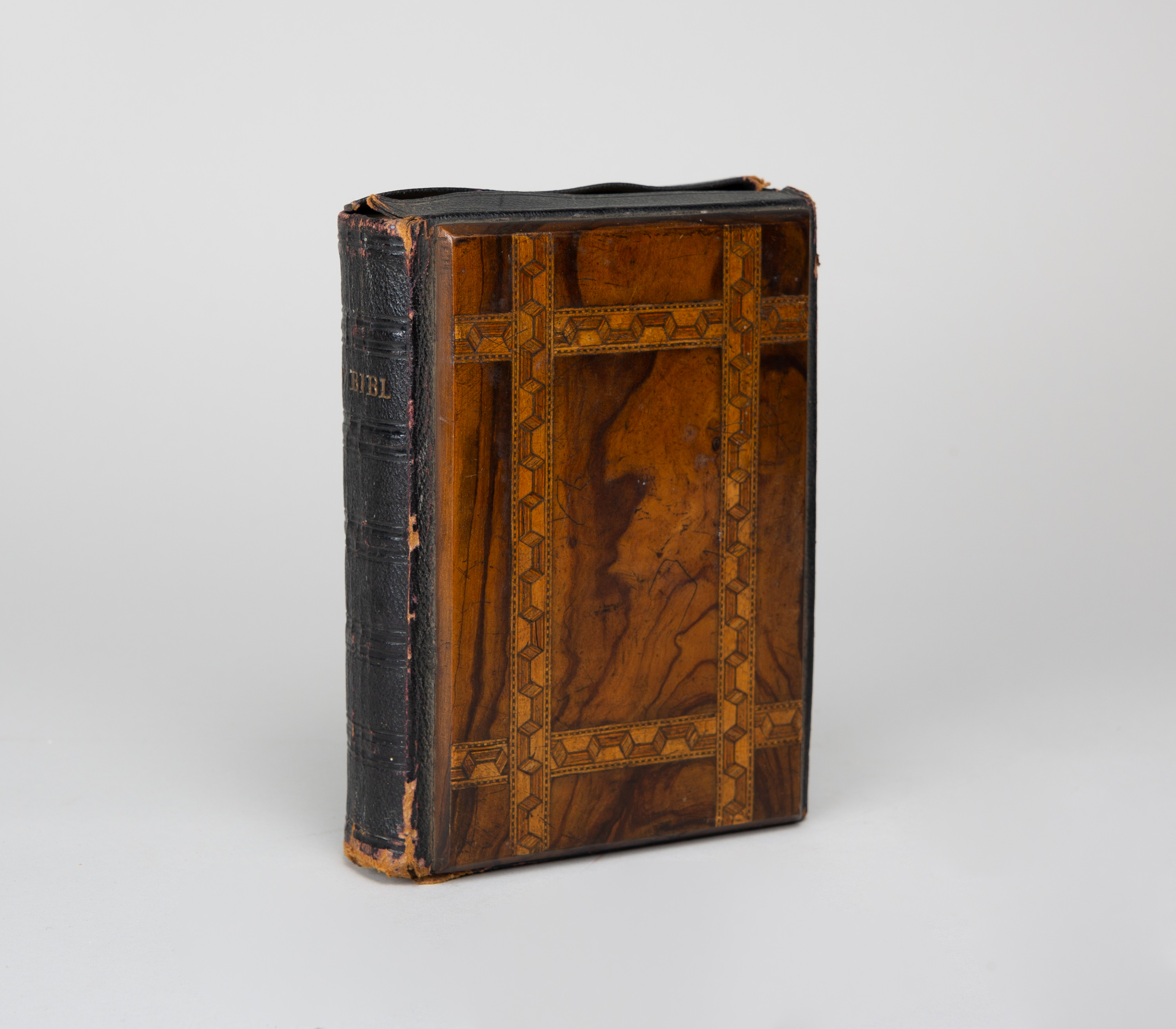
Biblia cambriana. - Y Bibl Cyssegr-lan, sef yr Hen Destament a’r Newydd. London: British and Foreign Bible Society (1881). 13,8 x 10,2 cm. With 6 maps. 1010 pp. Black blind-embossed leather with olive wood appliqués on the covers (the front cover featuring a decorative border, the back cover bearing the inscription ‘Jerusalem’ in Latin and Hebrew letters) and gold-embossed title; full gold edging.
(Worn and with minor defects to the cover; the wooden inlays have small scratches. The edges of the book are slightly stained. Slightly browned, with occasional age spots and stains. 4 leaves with larger brown stains.)
Cmp. Darlow/Moule 9661. - Provenance: With a handwritten note of ownership by W. H. Phillips, dated 16 May 1891, on the front endpaper. In the flap of the rear cover there is a folded and stamped certificate of recommendation or authorisation from No. 2 Royal Lodge (Grand Lodge of New Zealand) of the Order of Orange for William Phillipps, dated 23 April 1894, bearing the handwritten signatures of Joseph Carnahan and G. Dorner.
An interesting Welsh provenance, the further history of which can only be pieced together in broad outlines. The ownership note from 1891 and the certificate issued three years later initially point to a William (W.) H. Phillips/Phillipps as the previous owner or a member of the circle associated with the Welsh Bible. The certificate from the Grand Lodge of New Zealand confirms that the owner was later connected to New Zealand; possibly through emigration or as a member of a family of Welsh origin residing in New Zealand. The Order of Orange was widespread throughout the British Empire and served to unite Protestant communities in particular, even beyond the borders of Great Britain. The handy yet exceptionally well-bound Bible would also have been well-suited as a personal travel companion and everyday item for a member of the British military or the colonial administration. It is therefore conceivable that it accompanied one of its owners on a lengthy journey to the eastern Mediterranean. Particularly intriguing in this context would be the possibility of a stay in what was then Palestine. During the First World War, the region became a theatre of war between British and Ottoman troops and, after the war, came under British military administration before being placed under British administration as a League of Nations mandate territory from 1922 onwards. A Welsh soldier, civil servant or member of the British armed forces could well have taken the Bible with him to this region. Whether it eventually reached New Zealand by this or some other route, and from there returned to Europe (perhaps in connection with a later stay or deployment of a New Zealand soldier within the British Empire), cannot be substantiated.
(Worn and with minor defects to the cover; the wooden inlays have small scratches. The edges of the book are slightly stained. Slightly browned, with occasional age spots and stains. 4 leaves with larger brown stains.)
Cmp. Darlow/Moule 9661. - Provenance: With a handwritten note of ownership by W. H. Phillips, dated 16 May 1891, on the front endpaper. In the flap of the rear cover there is a folded and stamped certificate of recommendation or authorisation from No. 2 Royal Lodge (Grand Lodge of New Zealand) of the Order of Orange for William Phillipps, dated 23 April 1894, bearing the handwritten signatures of Joseph Carnahan and G. Dorner.
An interesting Welsh provenance, the further history of which can only be pieced together in broad outlines. The ownership note from 1891 and the certificate issued three years later initially point to a William (W.) H. Phillips/Phillipps as the previous owner or a member of the circle associated with the Welsh Bible. The certificate from the Grand Lodge of New Zealand confirms that the owner was later connected to New Zealand; possibly through emigration or as a member of a family of Welsh origin residing in New Zealand. The Order of Orange was widespread throughout the British Empire and served to unite Protestant communities in particular, even beyond the borders of Great Britain. The handy yet exceptionally well-bound Bible would also have been well-suited as a personal travel companion and everyday item for a member of the British military or the colonial administration. It is therefore conceivable that it accompanied one of its owners on a lengthy journey to the eastern Mediterranean. Particularly intriguing in this context would be the possibility of a stay in what was then Palestine. During the First World War, the region became a theatre of war between British and Ottoman troops and, after the war, came under British military administration before being placed under British administration as a League of Nations mandate territory from 1922 onwards. A Welsh soldier, civil servant or member of the British armed forces could well have taken the Bible with him to this region. Whether it eventually reached New Zealand by this or some other route, and from there returned to Europe (perhaps in connection with a later stay or deployment of a New Zealand soldier within the British Empire), cannot be substantiated.