Lot 50
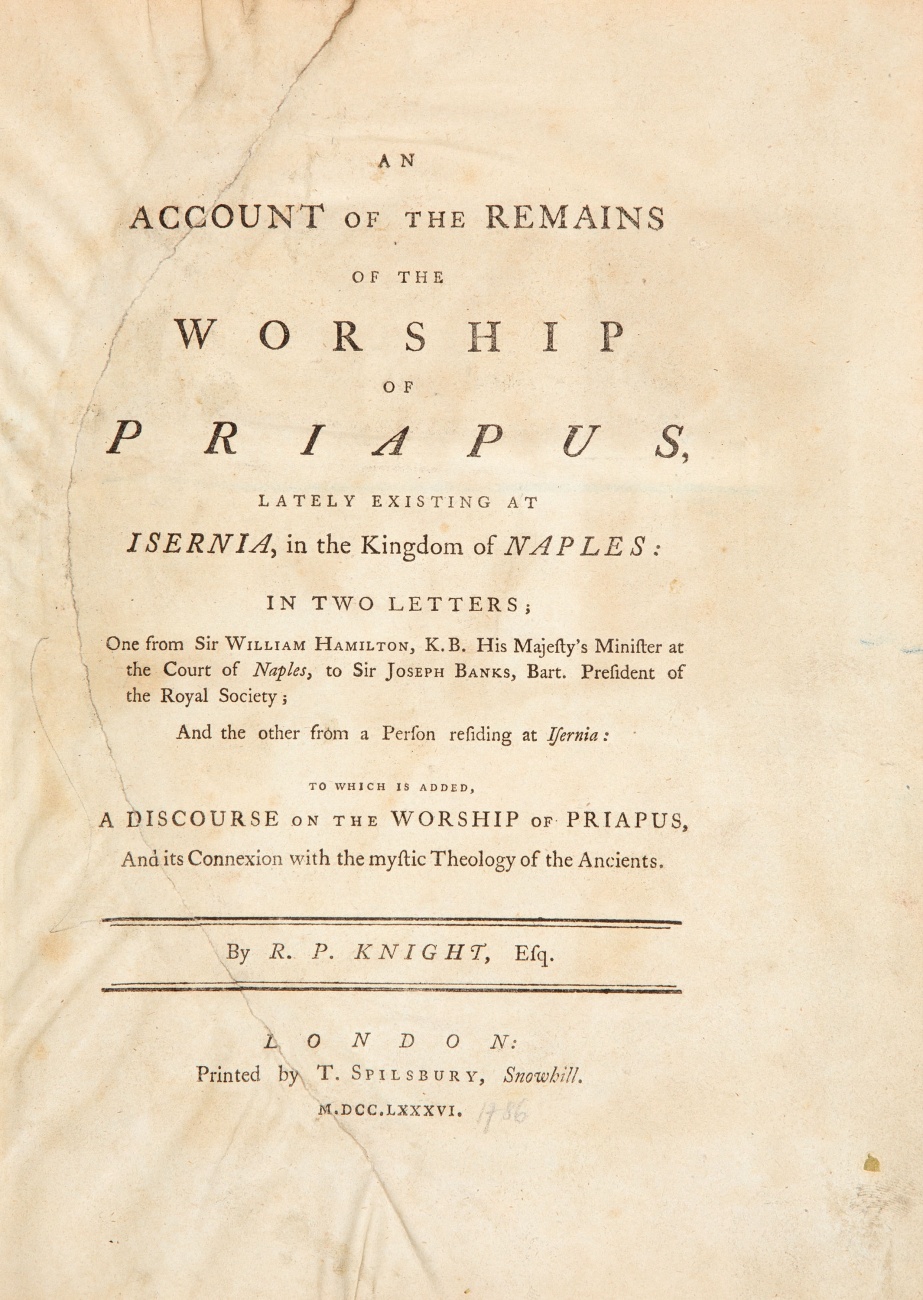
R. P. Knight, An account of the remains of the worship of Priapus. London 1786.
Estimate
€ 900
Starting Price
€ 600
Lot:
50
Category:
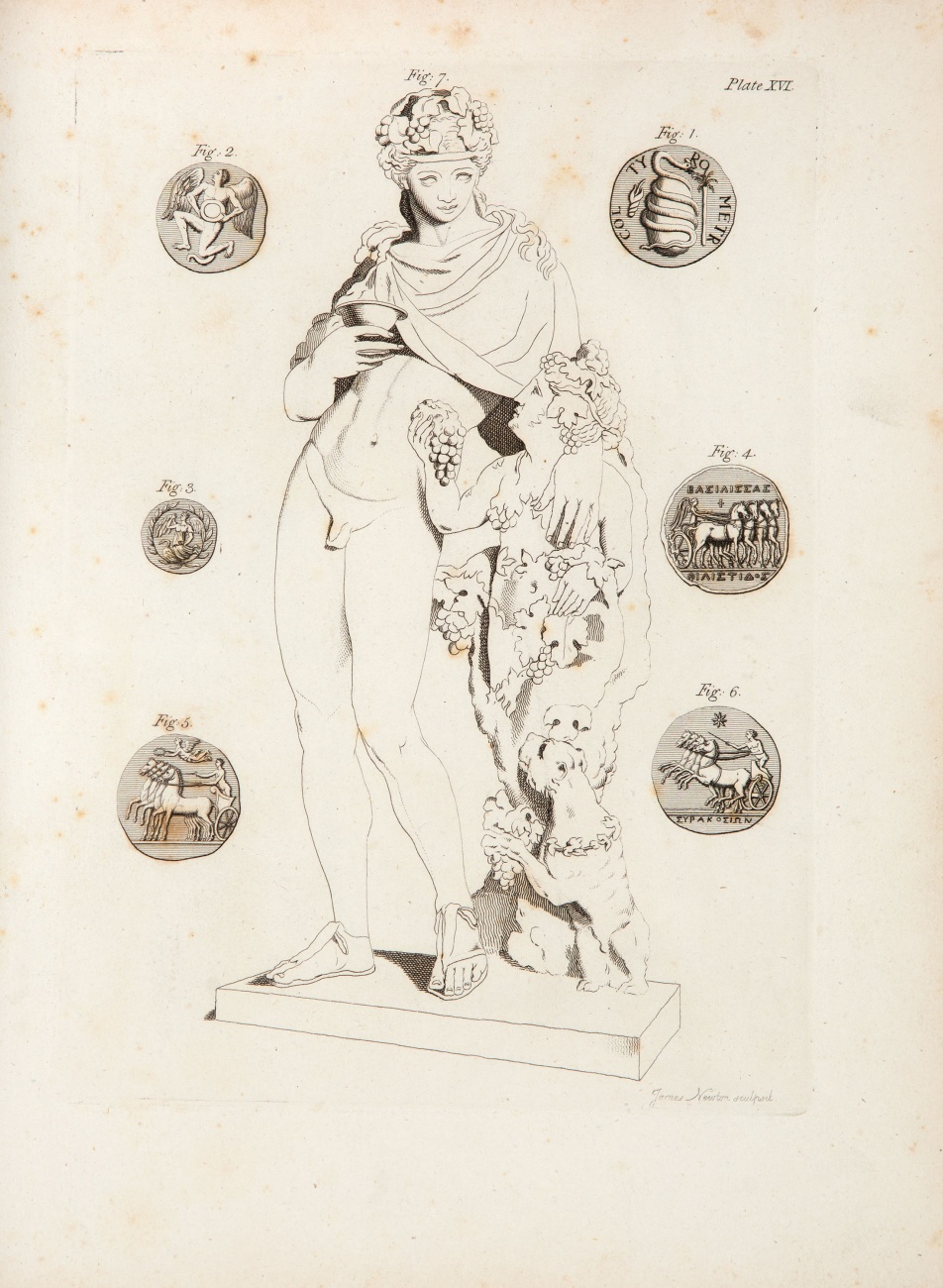
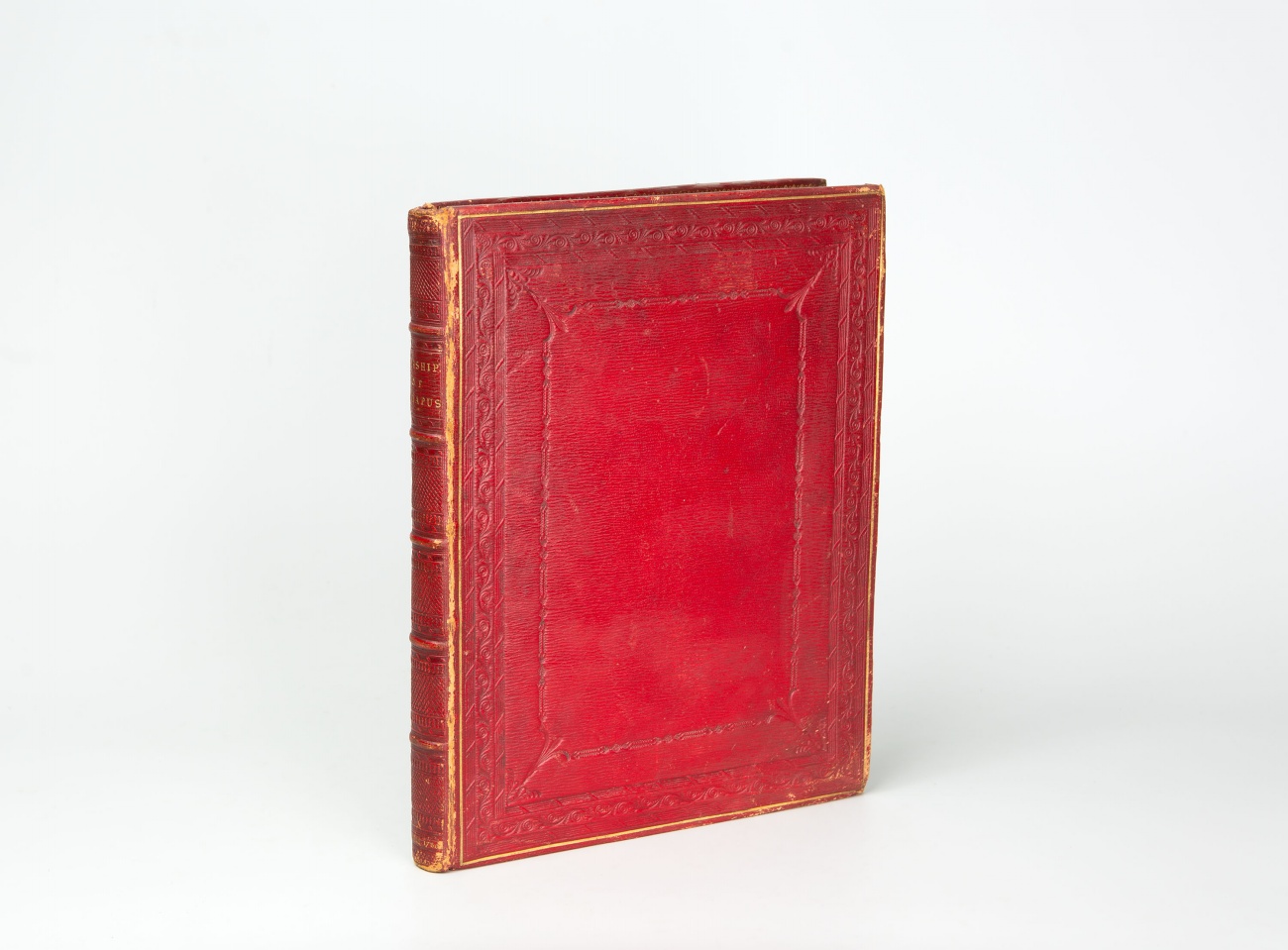
An account of the remains of the worship of Priapus, lately existing at Isernia, in the kingdom of Naples: In two letters; One from Sir William Hamilton ... to Sir Joseph Banks... and the other from a Person residing at Isernia: To which is added, a discourse on the worship of Priapus, and its connexion with the mystic theology of the ancients. 27,5 x 21 cm. Mit 18 gest. Abbildungen (1 Frontispitz, 6 Textkupfer und 11 ganzs. Tafeln). 195 SS. Späteres blind- und goldgepr. rotes Ldr. mit Rt., Steh- und Innenkantenverg., Goldschnitt.
((Ecken, Kanten und Gelenke berieben und bestoßen. Frontispiz, Titel und die ersten zwei Textbll. mit großem Riss, Frontispiz fest auf Unterlagekarton montiert, Titel und Folgeblätter hinterklebt und stärker wellig. Die letzten Textbll. und Tafeln leicht stockfleckig, sonst geringe Alters- und Gebrauchsspuren.))
Knight, Richard Payne: An account of the remains of the worship of Priapus, lately existing at Isernia, in the kingdom of Naples: In two letters; One from Sir William Hamilton ... to Sir Joseph Banks... and the other from a Person residing at Isernia: To which is added, a discourse on the worship of Priapus, and its connexion with the mystic theology of the ancients. London: Spilsbury 1786. 27,5 x 21 cm. Mit 18 gest. Abbildungen (1 Frontispitz, 6 Textkupfer und 11 ganzs. Tafeln). 195 SS. Späteres blind- und goldgepr. rotes Ldr. mit Rt., Steh- und Innenkantenverg., Goldschnitt.
(Ecken, Kanten und Gelenke berieben und bestoßen. Frontispiz, Titel und die ersten zwei Textbll. mit großem reparierten Durchriss, Frontispiz fest auf Unterlagekarton montiert, Titel und Folgeblätter hinterklebt und stärker wellig. Die letzten Textbll. und Tafeln leicht stockfleckig, sonst geringe Alters- und Gebrauchsspuren.)
Brunet III, 679. Gay-Lem. I, 14 u. 764 ff. Fraxi I, 3 ff. - Sehr seltenes Werk, das auch verboten wurde. (Knight's) "Museum of Phallic objects is now most carefully preserved in the British Museum" (Fraxi I, 8).
((Ecken, Kanten und Gelenke berieben und bestoßen. Frontispiz, Titel und die ersten zwei Textbll. mit großem Riss, Frontispiz fest auf Unterlagekarton montiert, Titel und Folgeblätter hinterklebt und stärker wellig. Die letzten Textbll. und Tafeln leicht stockfleckig, sonst geringe Alters- und Gebrauchsspuren.))
Knight, Richard Payne: An account of the remains of the worship of Priapus, lately existing at Isernia, in the kingdom of Naples: In two letters; One from Sir William Hamilton ... to Sir Joseph Banks... and the other from a Person residing at Isernia: To which is added, a discourse on the worship of Priapus, and its connexion with the mystic theology of the ancients. London: Spilsbury 1786. 27,5 x 21 cm. Mit 18 gest. Abbildungen (1 Frontispitz, 6 Textkupfer und 11 ganzs. Tafeln). 195 SS. Späteres blind- und goldgepr. rotes Ldr. mit Rt., Steh- und Innenkantenverg., Goldschnitt.
(Ecken, Kanten und Gelenke berieben und bestoßen. Frontispiz, Titel und die ersten zwei Textbll. mit großem reparierten Durchriss, Frontispiz fest auf Unterlagekarton montiert, Titel und Folgeblätter hinterklebt und stärker wellig. Die letzten Textbll. und Tafeln leicht stockfleckig, sonst geringe Alters- und Gebrauchsspuren.)
Brunet III, 679. Gay-Lem. I, 14 u. 764 ff. Fraxi I, 3 ff. - Sehr seltenes Werk, das auch verboten wurde. (Knight's) "Museum of Phallic objects is now most carefully preserved in the British Museum" (Fraxi I, 8).