Lot 928
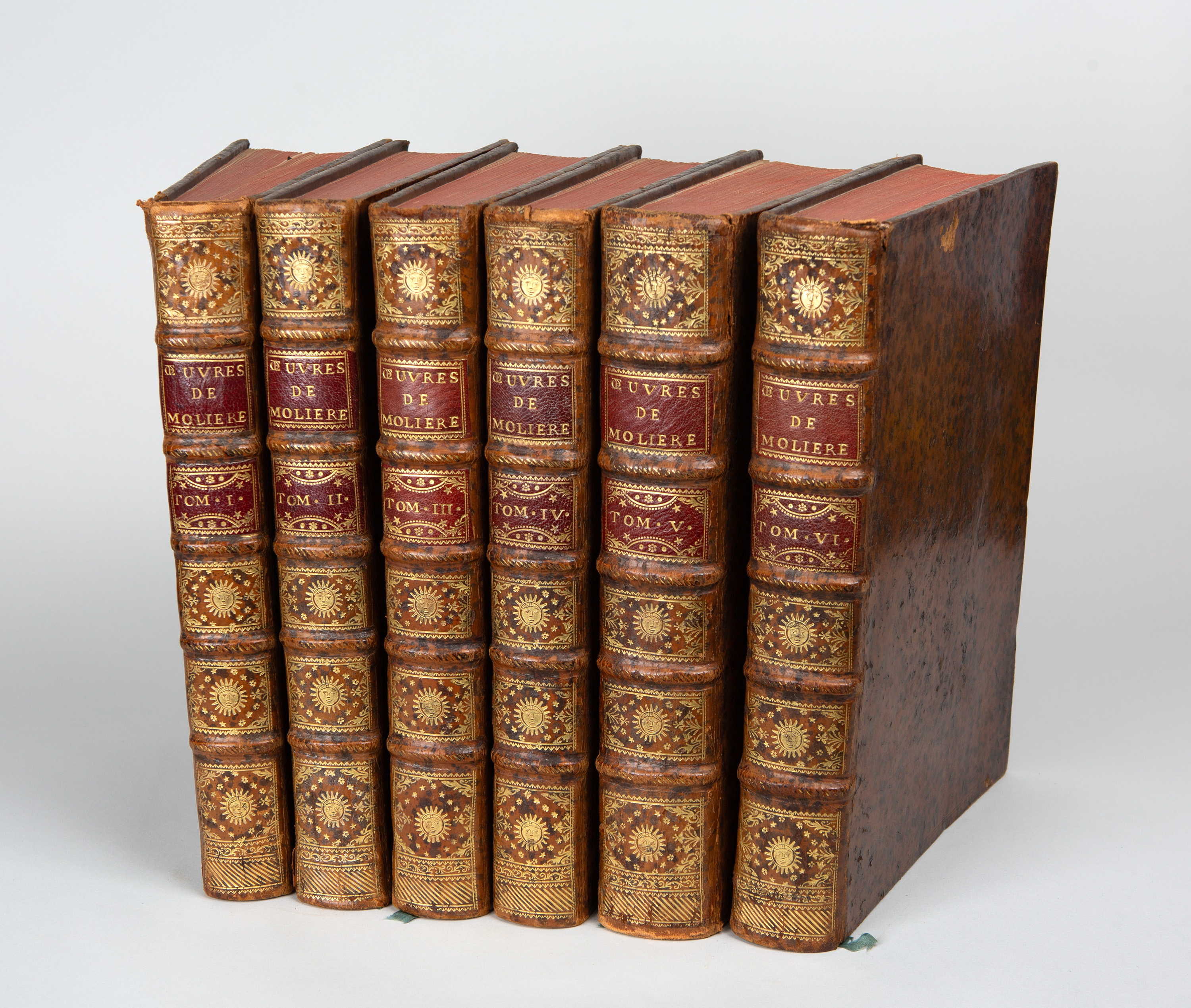
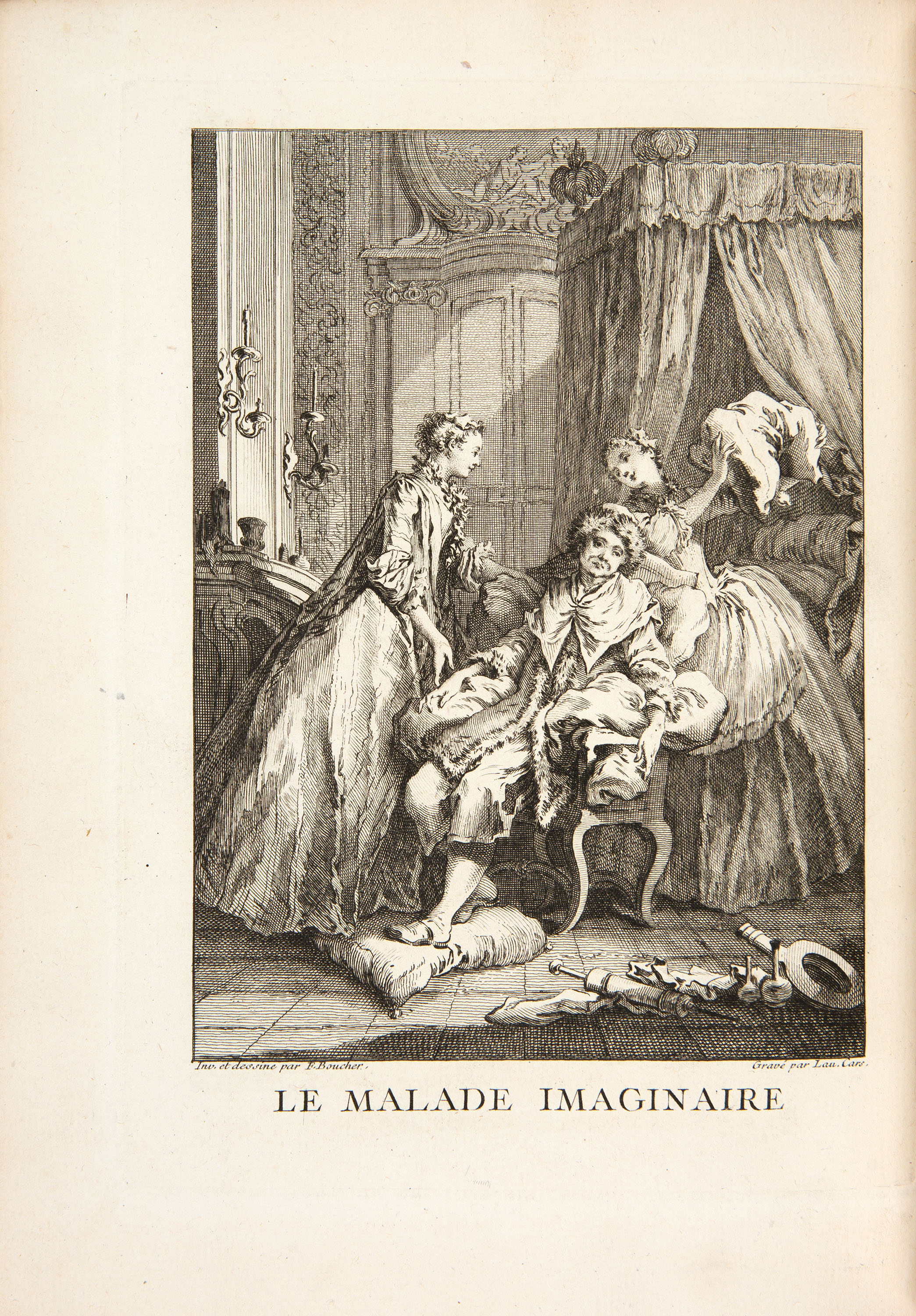
Molière, Oeuvres. 6 Vol. Illustr. by Boucher. Paris 1734.
Estimate
€ 800
Starting Price
€ 550
Hammer Price
€ 900
Lot:
928
Category:
Literature from the 17th to 19th century
Author:
Jean-Baptiste Poquelin
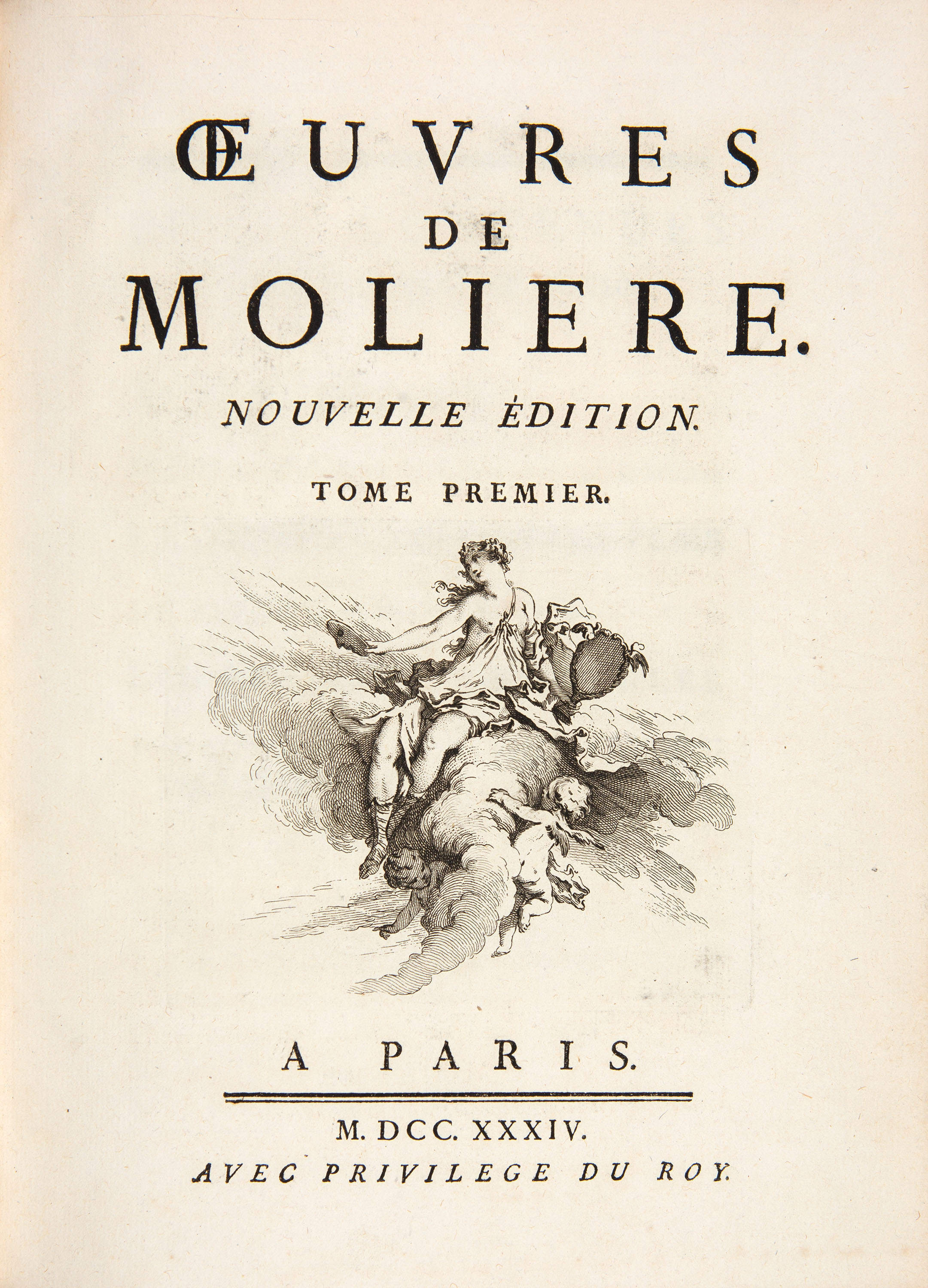
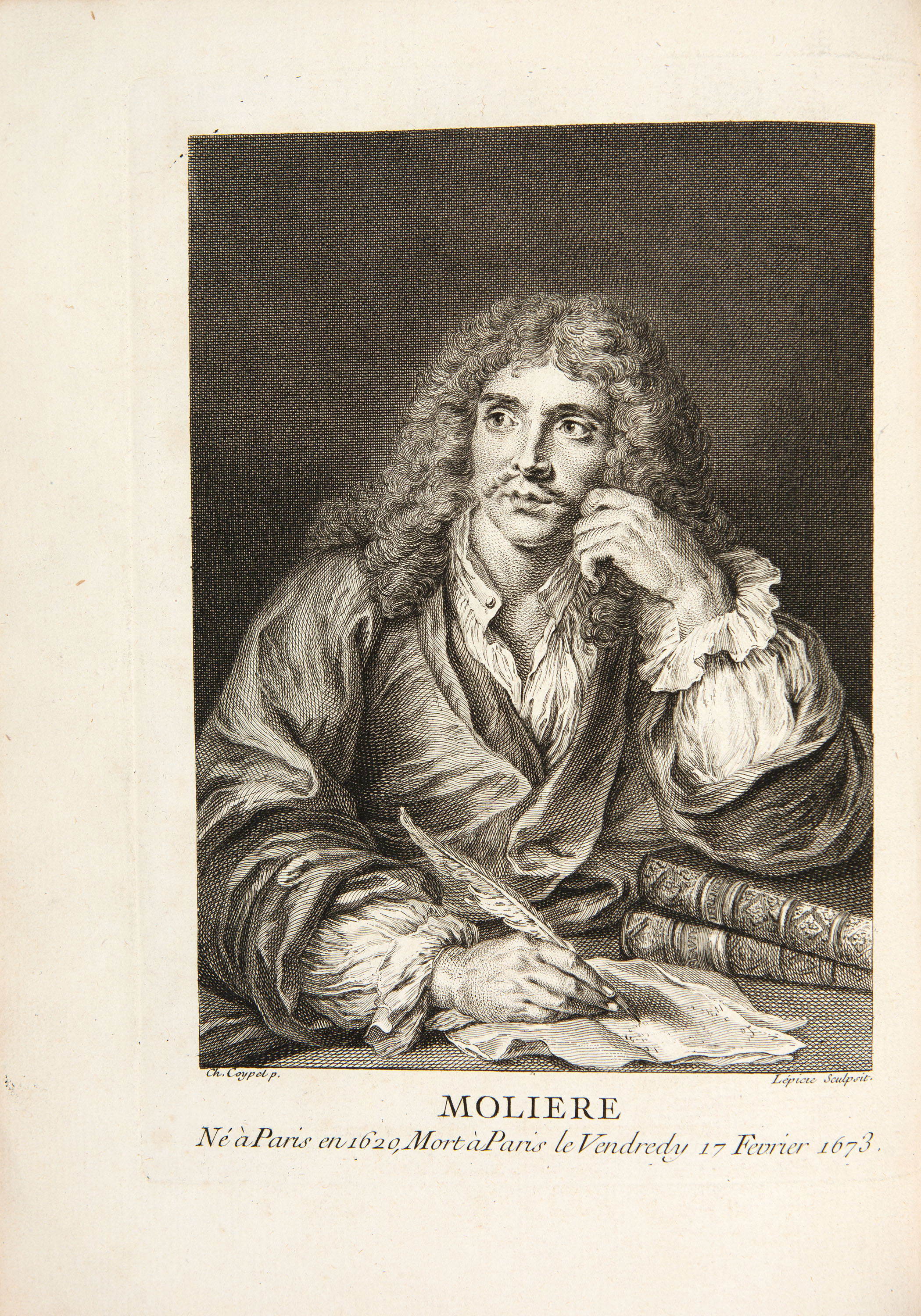
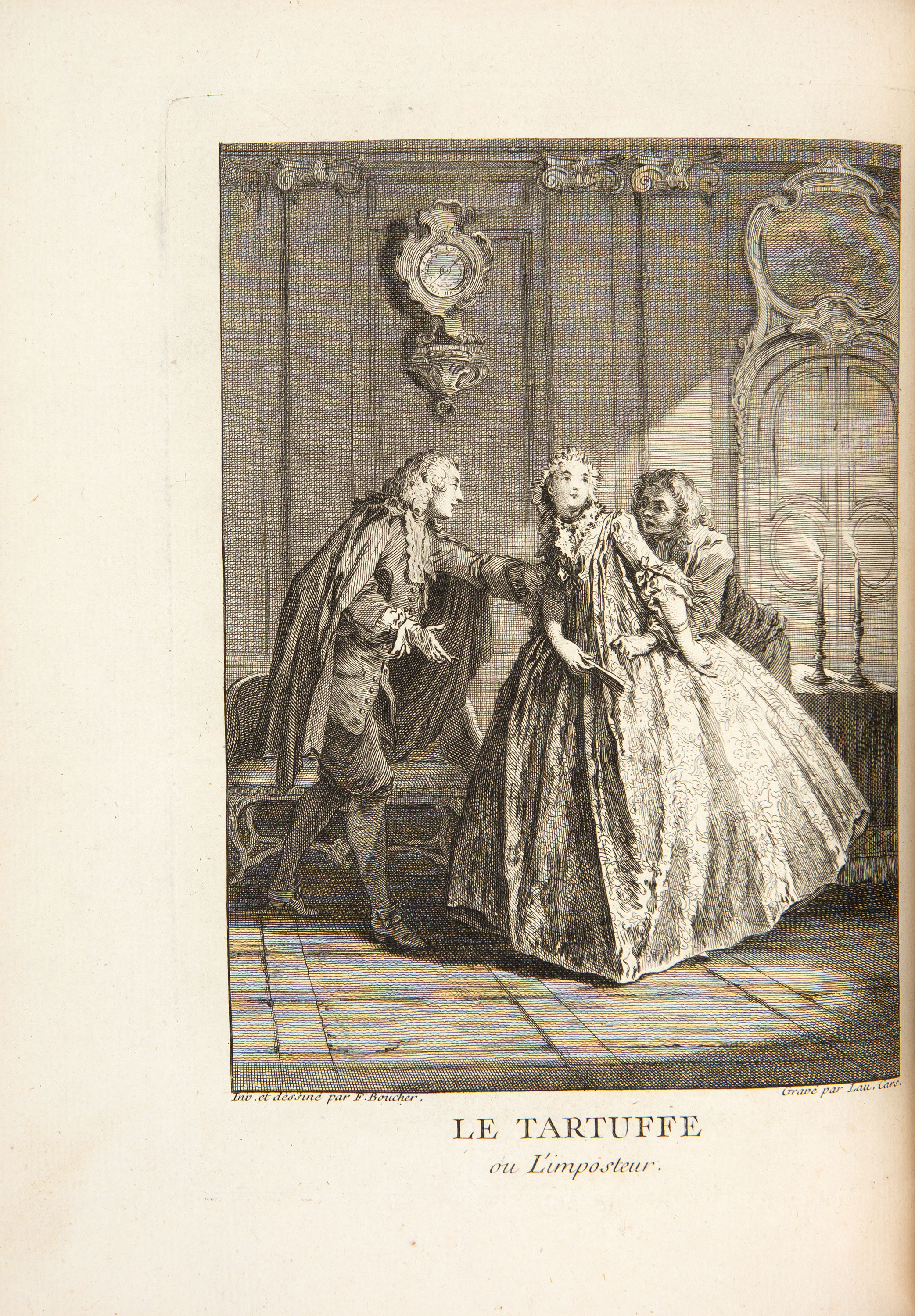
Molière (Jean-Baptiste Poquelin): Oeuvres. Nouvelle édition. 6 Vol. Paris: (Prault) 1734. 27,8 x 21 cm. With an engraved portrait by Lépicié after Coypel, 33 engraved plates by L. Cars after F. Boucher, 209 engraved vignettes, 103 engraved initials and 6 engraved title vignettes (repeated). 2 folios, LXX, 330 pp.; 3 folios, 446 pp.; 3 leaves, 442 pp.; 3 leaves, 420 pp.; 3 leaves, 618 pp.; 3 leaves, 554 pp. Marbled brown leather, 5 bands with blind-stamped cover fillets, 2 red spine labels, spine decoration and gilded edges.
(Slightly rubbed and bumped; some headbands slightly torn; joints loose; covers with faint scratch marks; Vol. 6 with a small scuff on the front cover. Endpapers with remnants of removed bookplates. The half-title page of the first volume and the title page of the second volume bear handwritten notes in black ink. A few leaves [including the verso of leaf Bb⁴ in Vol. 2 and also the verso of leaf Bb⁴ in Vol. 5] with marginal notes in brown ink. The first 8 quires of Vol. 4 have water stains on the lower margin. Leaf A² in Vol. 5 is creased. Somewhat browned in places and with occasional minimal age spots.)
Cohen/R. 712 ff. Kat. Col. Fürstenberg Nr. 16. Sander 1368. Tchemerzine VIII, p. 359. - “Très belle édition” (Tchemerzine). - “Boucher’s magnum opus as a book illustrator” (Fürstenberg Collection catalogue). - “The Molière is one of Boucher’s greatest claims to fame. In their pictorial impact and generous composition, these plates form a milestone whose artistic influence cannot be overestimated. Gravelot learnt more from these plates than he did in the master’s studio, and it is fair to say that the illustrative style of the Louis XV period found its starting point here. Throughout French printmaking of the following decades, one will repeatedly find motifs which, in terms of costume and subject matter, in the manner of conception as well as in composition, can be traced back to this illustration” (Fürstenberg, p. 81). - A magnificently produced complete edition of Molière’s works, printed on high-quality paper. The six-volume ‘Nouvelle édition’ brings together the greatest comedies of the great French playwright in meticulous contemporary typography and ranks among the most significant illustrated editions of Molière’s works from the 18th century. It documents the enduring reception of Molière during the Age of Enlightenment and is one of the earliest authoritative collections of his complete dramatic works. A representative example of 18th-century French book printing and of great significance in the history of literature and theatre. – Printing details: Vol. 6, p. 360, line 12: ‘comteese’, not ‘comteesse’ (Cohen/R.) or ‘comtesse’. Lacks the ‘carton’ for *Le Sicilien* mentioned by Cohen/R. in the fourth volume. – Contrary to Cohen/R., this copy contains 6 (instead of 5) plates in the third volume and 5 (instead of 6) plates in the fifth volume.
(Slightly rubbed and bumped; some headbands slightly torn; joints loose; covers with faint scratch marks; Vol. 6 with a small scuff on the front cover. Endpapers with remnants of removed bookplates. The half-title page of the first volume and the title page of the second volume bear handwritten notes in black ink. A few leaves [including the verso of leaf Bb⁴ in Vol. 2 and also the verso of leaf Bb⁴ in Vol. 5] with marginal notes in brown ink. The first 8 quires of Vol. 4 have water stains on the lower margin. Leaf A² in Vol. 5 is creased. Somewhat browned in places and with occasional minimal age spots.)
Cohen/R. 712 ff. Kat. Col. Fürstenberg Nr. 16. Sander 1368. Tchemerzine VIII, p. 359. - “Très belle édition” (Tchemerzine). - “Boucher’s magnum opus as a book illustrator” (Fürstenberg Collection catalogue). - “The Molière is one of Boucher’s greatest claims to fame. In their pictorial impact and generous composition, these plates form a milestone whose artistic influence cannot be overestimated. Gravelot learnt more from these plates than he did in the master’s studio, and it is fair to say that the illustrative style of the Louis XV period found its starting point here. Throughout French printmaking of the following decades, one will repeatedly find motifs which, in terms of costume and subject matter, in the manner of conception as well as in composition, can be traced back to this illustration” (Fürstenberg, p. 81). - A magnificently produced complete edition of Molière’s works, printed on high-quality paper. The six-volume ‘Nouvelle édition’ brings together the greatest comedies of the great French playwright in meticulous contemporary typography and ranks among the most significant illustrated editions of Molière’s works from the 18th century. It documents the enduring reception of Molière during the Age of Enlightenment and is one of the earliest authoritative collections of his complete dramatic works. A representative example of 18th-century French book printing and of great significance in the history of literature and theatre. – Printing details: Vol. 6, p. 360, line 12: ‘comteese’, not ‘comteesse’ (Cohen/R.) or ‘comtesse’. Lacks the ‘carton’ for *Le Sicilien* mentioned by Cohen/R. in the fourth volume. – Contrary to Cohen/R., this copy contains 6 (instead of 5) plates in the third volume and 5 (instead of 6) plates in the fifth volume.