Lot 599
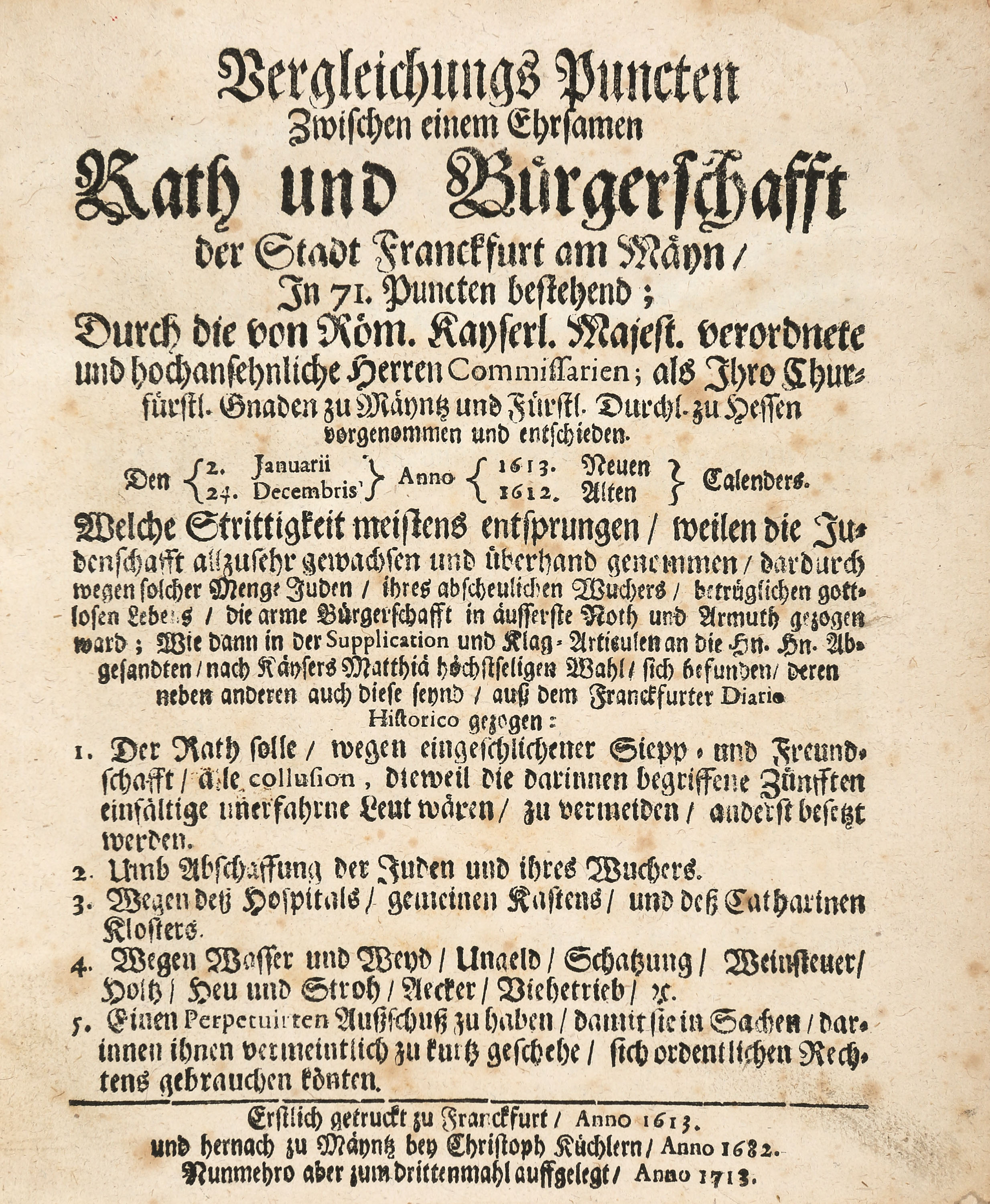
Vergleichungs Puncten zwischen einem Ehrsamen Rath und Bürgerschafft der Stadt Franckfurt am Mayn. Frankfurt 1713.
Estimate
€ 200
Starting Price
€ 140
Hammer Price
€ 140
Lot:
599
Category:
History, cultural history and miscellaneous
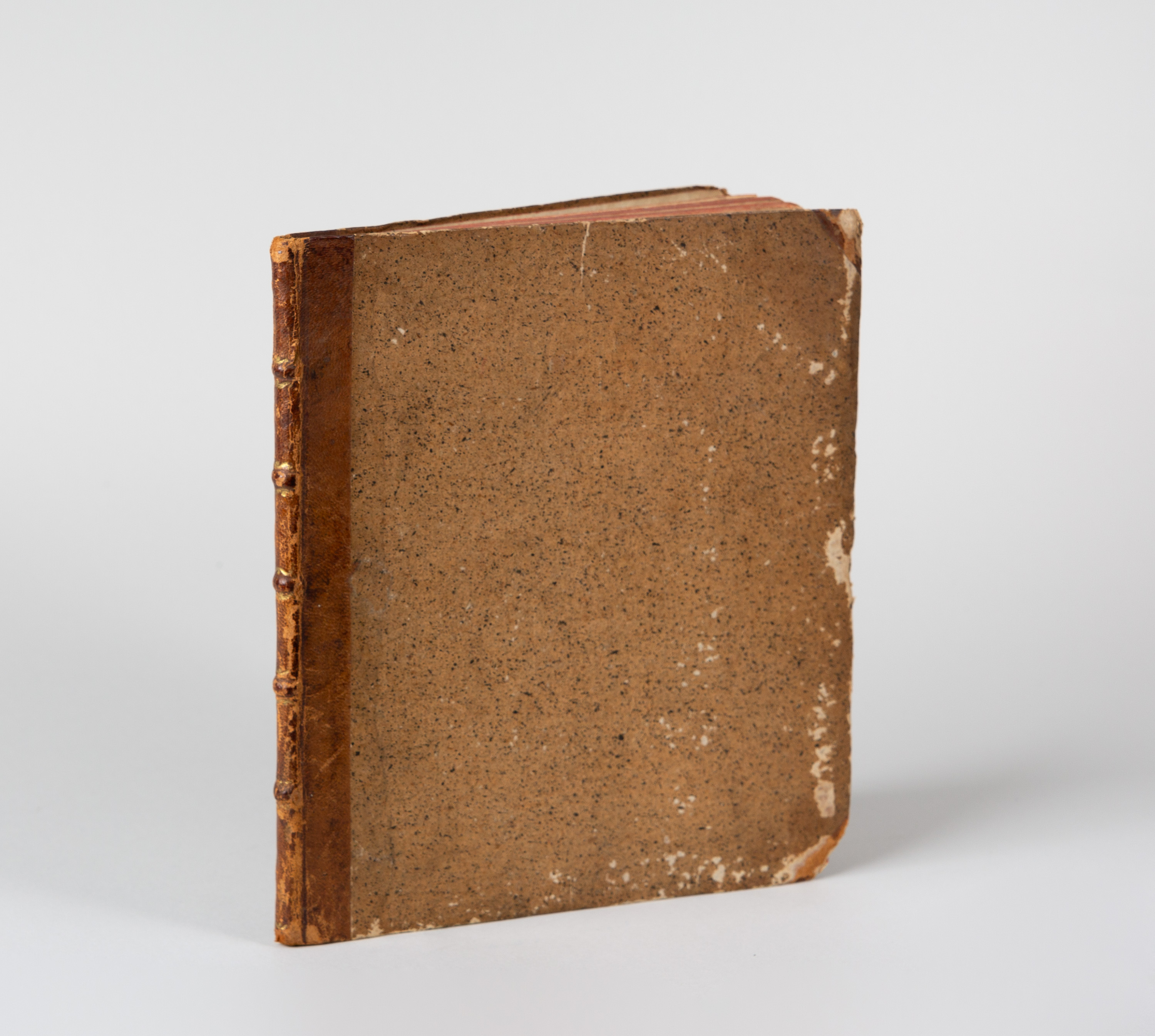
Frankfurt am Main. - Vergleichungs Puncten zwischen einem Ehrsamen Rath und Bürgerschafft der Stadt Franckfurt am Mäyn. 3rd Ed. No place of publication or printer’s name given, 1 18,5 x 16,1 cm. 58 pp. Half-leather.
(Stained and bumped. Tanned, with damp edges and age spots. Very closely trimmed along the lower edge in places. An engraved bookplate on the front endpaper.)
VD18 10387307. - The volume contains the 71-point agreement between the Council and the citizens of the Imperial City of Frankfurt am Main, which was reached through imperial mediation in the wake of the severe urban unrest at the beginning of the 17th century. The decision was made by commissioners appointed by Emperor Matthias, including the Elector of Mainz and the Landgrave of Hesse, and is dated 2 January 1613 according to the new calendar, or 24 December 1612 according to the old calendar. The detailed reasoning and contextualisation of the conflict are particularly illuminating. The rapid growth of the Jewish community and the resulting economic competition are cited as a key grievance of the citizenry. These events are linked to the Fettmilch Uprising of 1612–1616, a revolt by the citizens of Frankfurt against the City Council characterised by social, economic, religious and political tensions. The points of comparison reproduced here provide an insight into the citizens’ demands, the disputes over the council’s constitution and municipal privileges, and the efforts of the imperial commission to resolve the conflict.
(Stained and bumped. Tanned, with damp edges and age spots. Very closely trimmed along the lower edge in places. An engraved bookplate on the front endpaper.)
VD18 10387307. - The volume contains the 71-point agreement between the Council and the citizens of the Imperial City of Frankfurt am Main, which was reached through imperial mediation in the wake of the severe urban unrest at the beginning of the 17th century. The decision was made by commissioners appointed by Emperor Matthias, including the Elector of Mainz and the Landgrave of Hesse, and is dated 2 January 1613 according to the new calendar, or 24 December 1612 according to the old calendar. The detailed reasoning and contextualisation of the conflict are particularly illuminating. The rapid growth of the Jewish community and the resulting economic competition are cited as a key grievance of the citizenry. These events are linked to the Fettmilch Uprising of 1612–1616, a revolt by the citizens of Frankfurt against the City Council characterised by social, economic, religious and political tensions. The points of comparison reproduced here provide an insight into the citizens’ demands, the disputes over the council’s constitution and municipal privileges, and the efforts of the imperial commission to resolve the conflict.