Lot 8
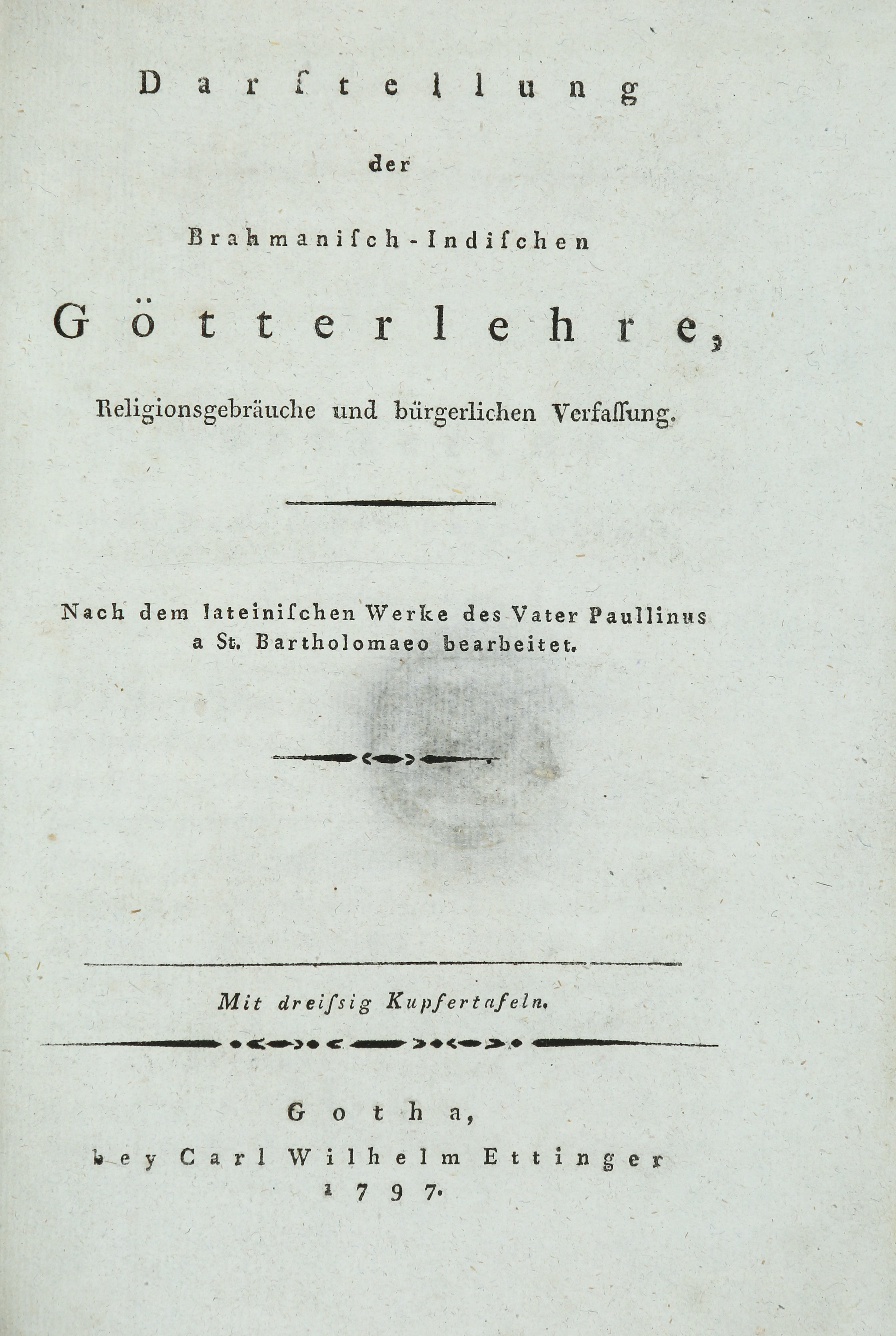
P. a St. Bartholomaeo, Darstellung der Brahmanisch-Indischen Götterlehre. Gotha 1797.
Estimate
€ 200
Starting Price
€ 140
Hammer Price
€ 240
Lot:
8
Category:
Geography and work of views
Author:
(d.i. Johann Philipp Wesdin) Paulinus a Sancto Bartholomaeo
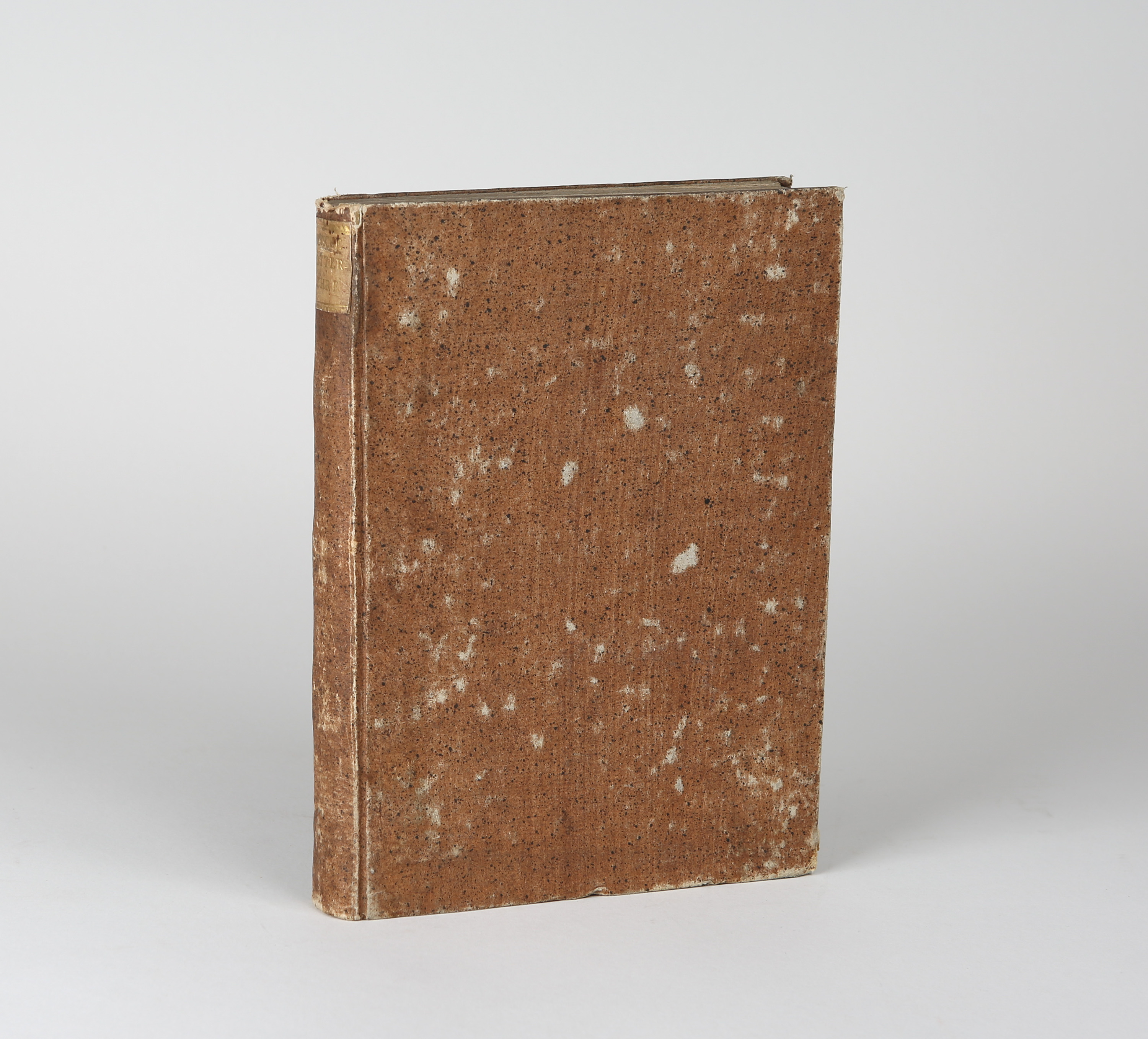
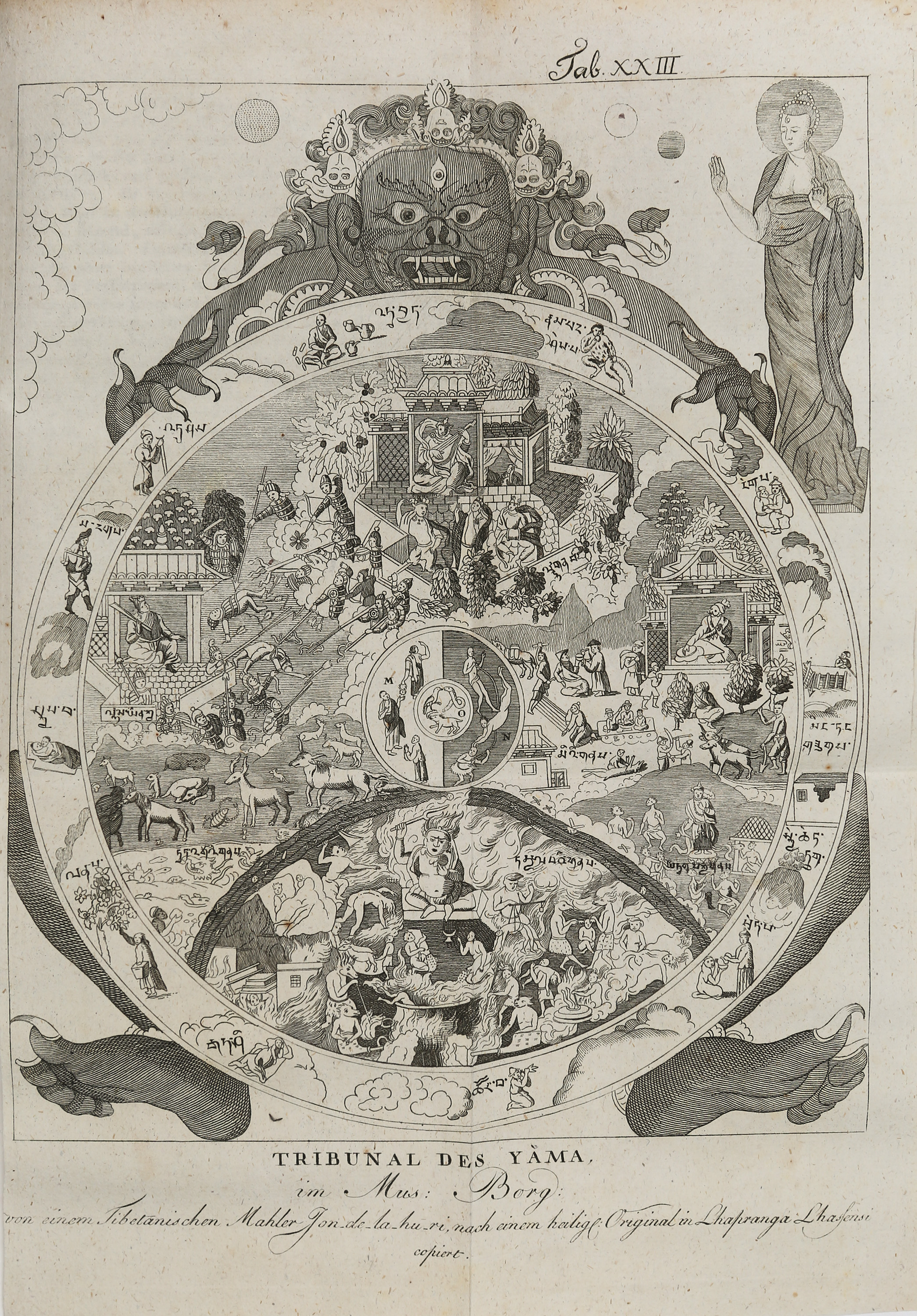
Paulinus a Sancto Bartholomaeo , (d.i. Johann Philipp Wesdin): Darstellung der Brahmanischen-Indischen Götterlehre, Religionsgebräuche und bürgerlichen Verfassung. Nach dem lateinischen Werke bearbeitet. Gotha: C. W. Ettinger 1797. 21,5 x 15 cm. With 30 (2 folded) copper plates, 1 text woodcut and 1 text copperplate. XVI pp., 268 pp. Paperback with a spine label.
(Scuffed and bumped. Title page with an obliterated owner’s inscription in the centre. The book block is slightly compressed in the top right-hand corner towards the end; pages 215 to 222 are discoloured, and the book as a whole shows some water-stains and age-stains.)
VD18 14528398. See Brunet IV, 446. – The Austrian orientalist and Carmelite J. Ph. Wesdin travelled to the Malabar Coast as a missionary between 1776 and 1789 under his religious name, Paulinus a Sancto Bartholomaeo. On his return to Rome, he wrote a variety of works on Oriental languages and classical antiquity, as well as two Sanskrit grammars in 1790 and 1802, which exerted a significant influence on the subsequent development of linguistics and philology. (see ADB XXV, 275). – The plates featuring numerous depictions of Hindu gods.
(Scuffed and bumped. Title page with an obliterated owner’s inscription in the centre. The book block is slightly compressed in the top right-hand corner towards the end; pages 215 to 222 are discoloured, and the book as a whole shows some water-stains and age-stains.)
VD18 14528398. See Brunet IV, 446. – The Austrian orientalist and Carmelite J. Ph. Wesdin travelled to the Malabar Coast as a missionary between 1776 and 1789 under his religious name, Paulinus a Sancto Bartholomaeo. On his return to Rome, he wrote a variety of works on Oriental languages and classical antiquity, as well as two Sanskrit grammars in 1790 and 1802, which exerted a significant influence on the subsequent development of linguistics and philology. (see ADB XXV, 275). – The plates featuring numerous depictions of Hindu gods.