Lot 311
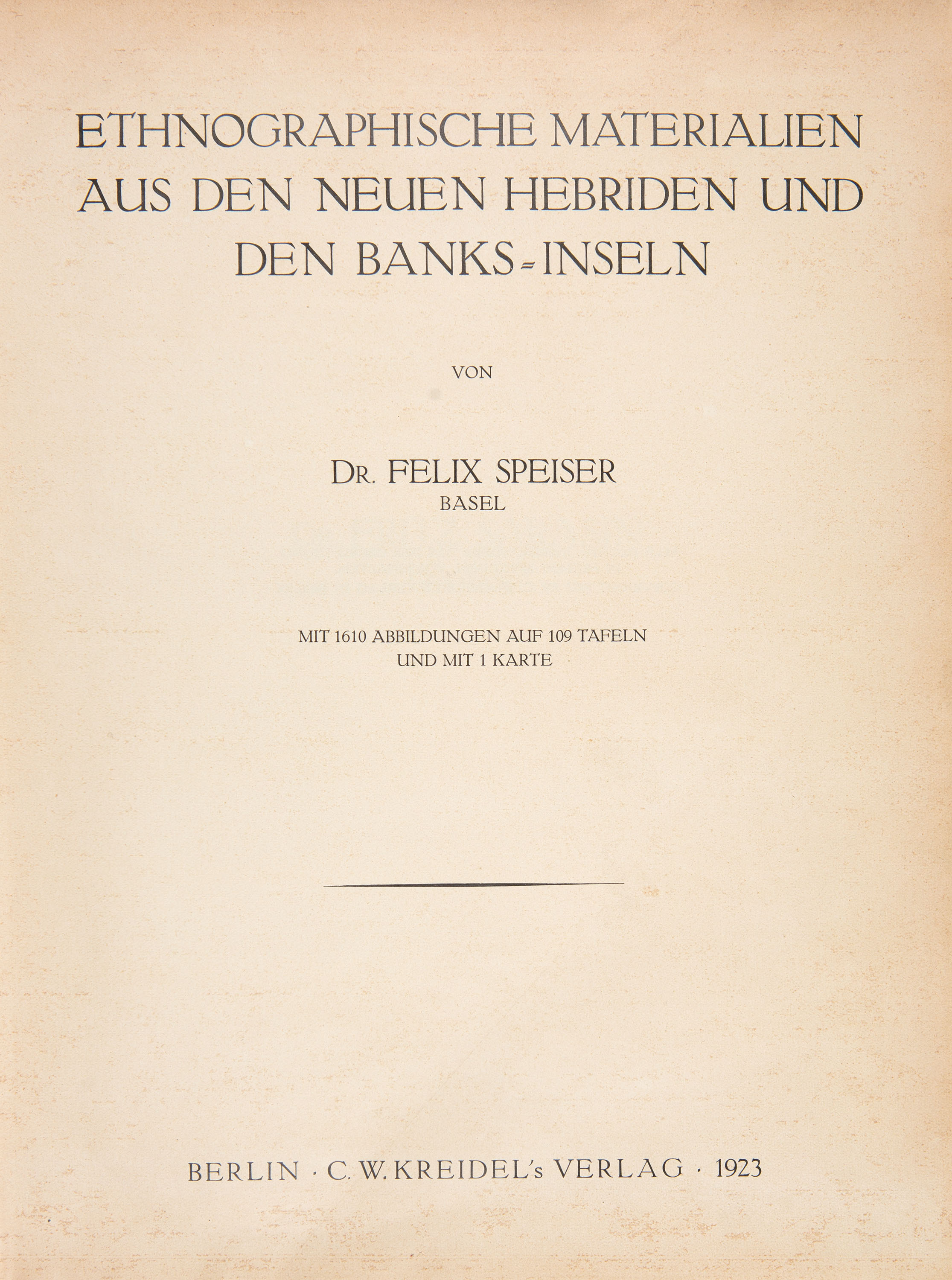
F. Speiser, Ethnographische Materialien aus den Neuen Hybriden und den Banks-Inseln. Berlin 1923.
Estimate
€ 3.500
Starting Price
€ 2.500
Lot:
311
Category:
Geography and work of views
Author:
Felix Speiser
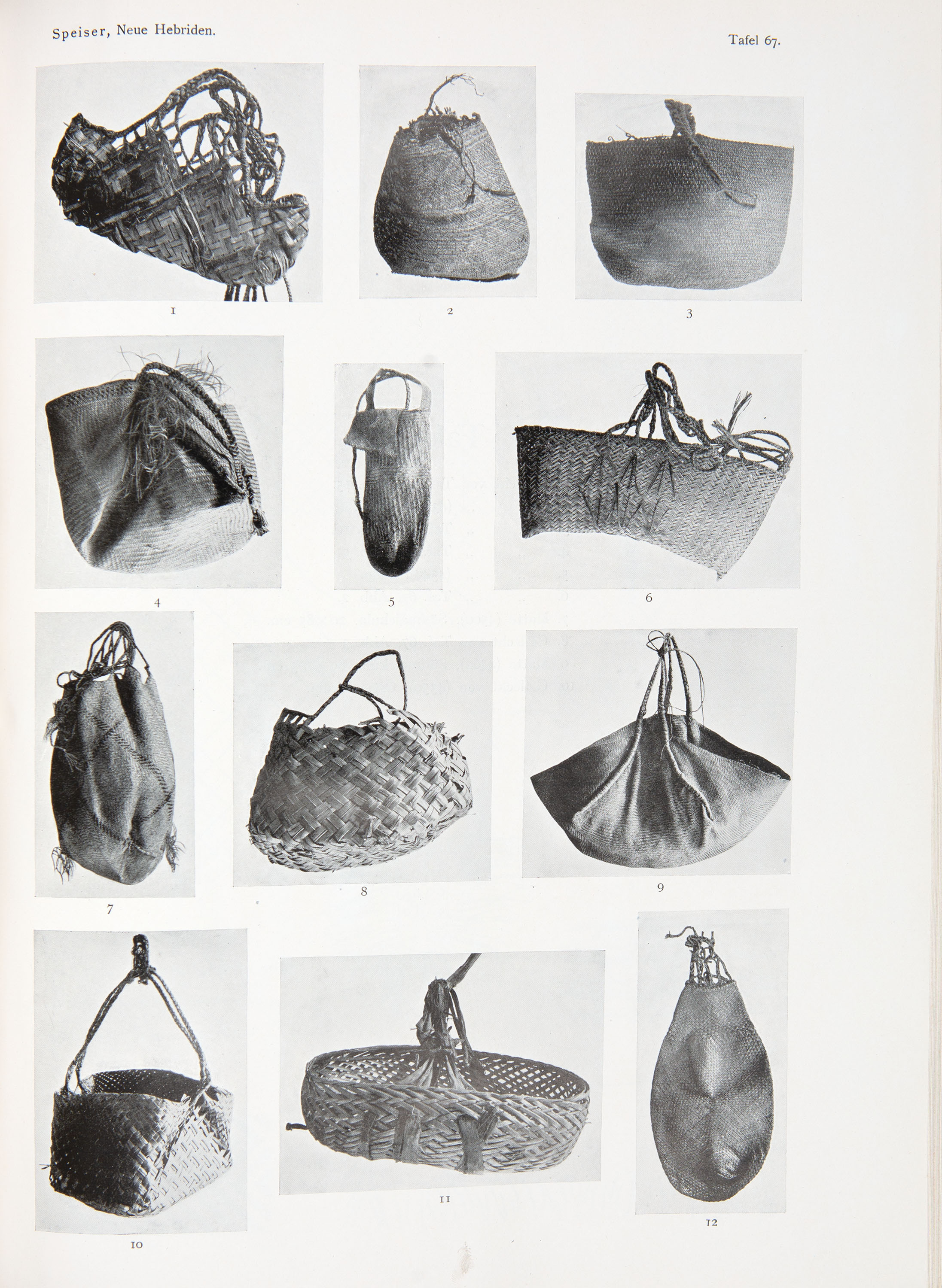
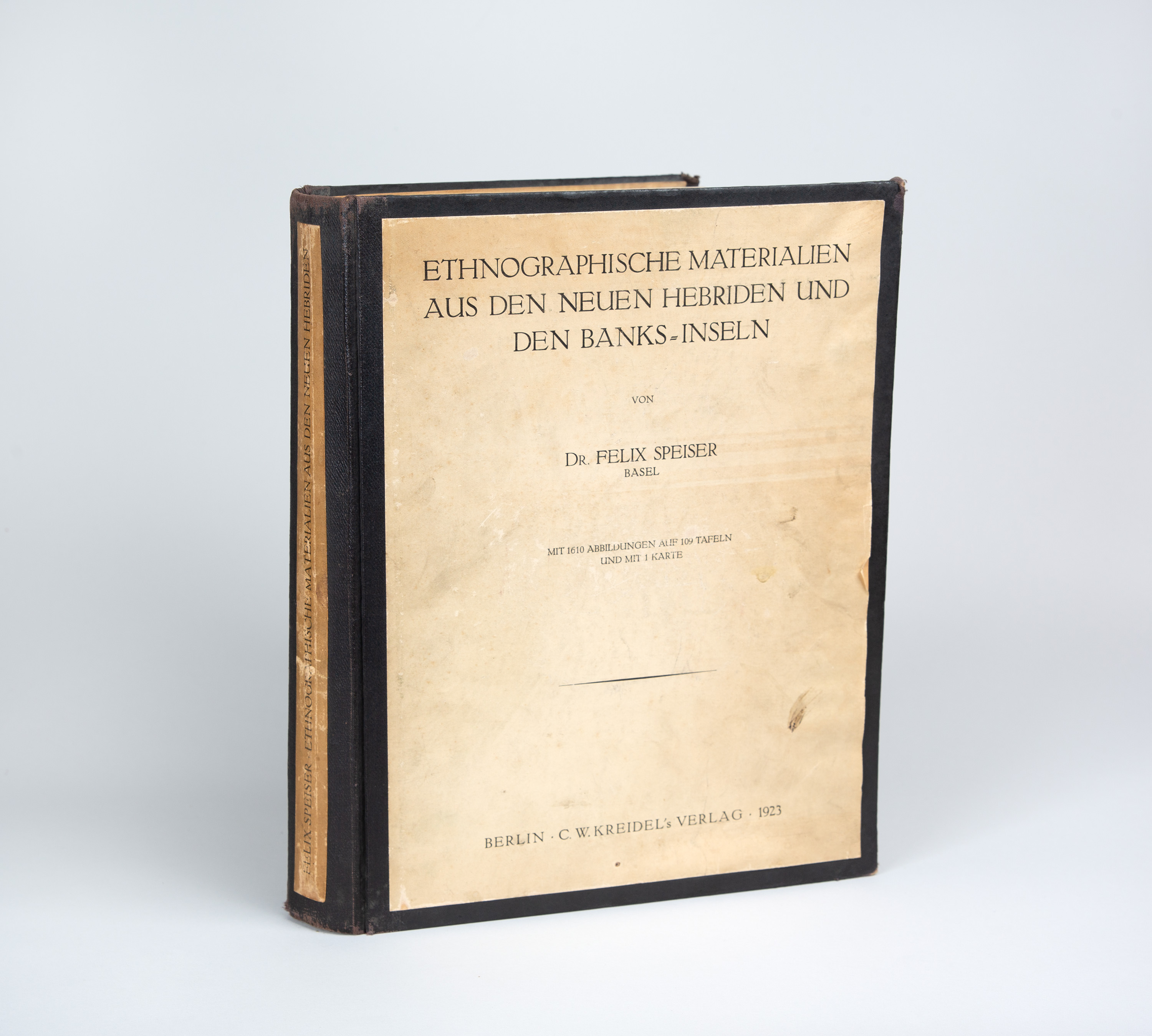
Speiser, Felix: Ethnographische Materialien aus den Neuen Hybriden und den Banks-Inseln. Berlin: Kreidel 1923. 30,5 x 23,4 cm. With one map and 1,610 illustrations on 109 plates. VII, 457 pp. Partial linen binding with original dust jacket attached to the covers and spine.
(Worn, slightly bumped, corners partially split; the original dust jacket is stained. The endpapers are more heavily browned; otherwise, the interior edges are lightly browned. The plates have only a few minor stains and are slightly wavy in places. “DSB” stamp on the last plate.)
Extremely rare ethnographic documentation of the indigenous cultures of the Melanesian island groups in the South Pacific. Only two copies have been documented at auctions. - The Swiss ethnologist Felix Speiser (1880–1949) directed the Ethnological Museum (today: Museum of Cultures) in Basel and undertook several research expeditions during the first thirty years of the 20th century, including a trip to Vanuatu in 1910–12 (together with Fritz Sarasin). Speiser systematically describes social organization, kinship structures, religious beliefs, rituals, material culture, and economic practices. He also addresses topics such as magic, ancestor worship, initiation rites, “secret societies,” and the visual arts. In the tradition of early 20th-century ethnographic research, Speiser’s account is written in a distinctly ethnographic style and is less interpretive. His work is based on his own field research and includes reproductions of photographs as well as drawings made by the author himself. His aim is to document cultural practices as accurately and comparatively as possible. - From the library of Bernhard Struck (1888–1971), former director of the Institute for Anthropology and Ethnology in Jena. Owner’s stamp on the flyleaf.
(Worn, slightly bumped, corners partially split; the original dust jacket is stained. The endpapers are more heavily browned; otherwise, the interior edges are lightly browned. The plates have only a few minor stains and are slightly wavy in places. “DSB” stamp on the last plate.)
Extremely rare ethnographic documentation of the indigenous cultures of the Melanesian island groups in the South Pacific. Only two copies have been documented at auctions. - The Swiss ethnologist Felix Speiser (1880–1949) directed the Ethnological Museum (today: Museum of Cultures) in Basel and undertook several research expeditions during the first thirty years of the 20th century, including a trip to Vanuatu in 1910–12 (together with Fritz Sarasin). Speiser systematically describes social organization, kinship structures, religious beliefs, rituals, material culture, and economic practices. He also addresses topics such as magic, ancestor worship, initiation rites, “secret societies,” and the visual arts. In the tradition of early 20th-century ethnographic research, Speiser’s account is written in a distinctly ethnographic style and is less interpretive. His work is based on his own field research and includes reproductions of photographs as well as drawings made by the author himself. His aim is to document cultural practices as accurately and comparatively as possible. - From the library of Bernhard Struck (1888–1971), former director of the Institute for Anthropology and Ethnology in Jena. Owner’s stamp on the flyleaf.