Lot 287
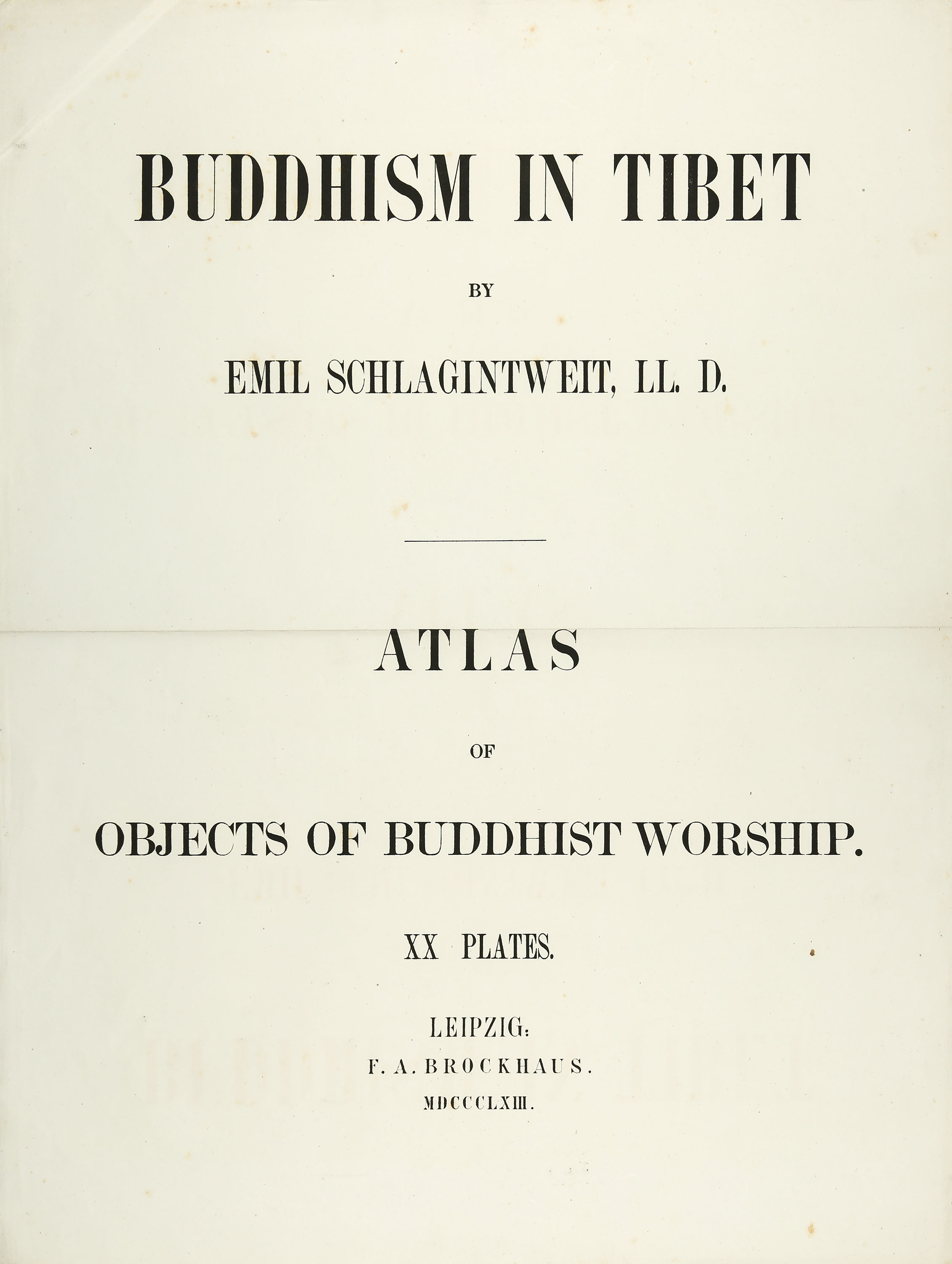
E. Schlagintweit, Buddhism in Tibet. Atlas of Objects of Buddhist Worship. Leipzig 1863.
Estimate
€ 200
Starting Price
€ 140
Hammer Price
€ 450
Lot:
287
Category:
Geography and work of views
Author:
Emil Schlagintweit
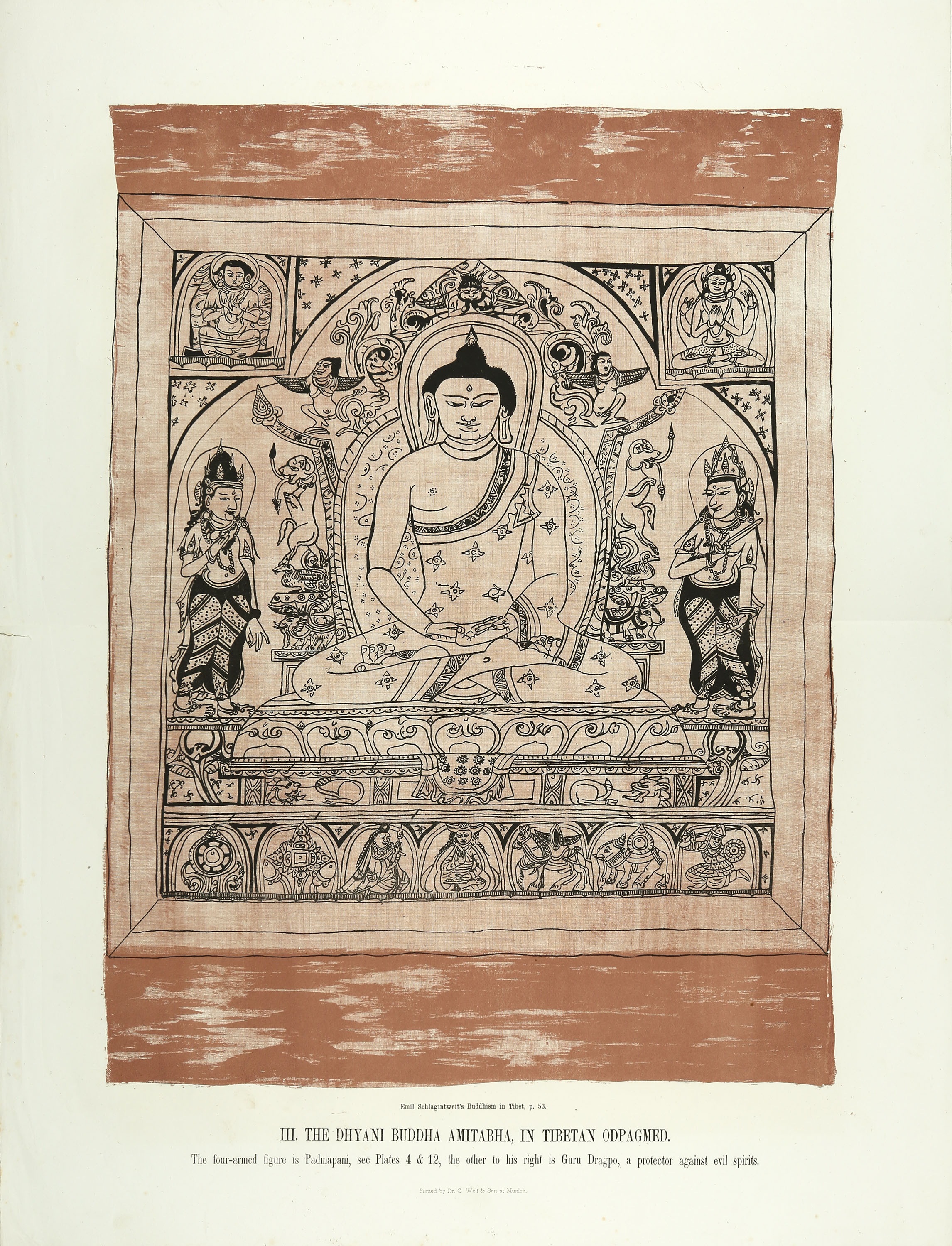
Schlagintweit, Emil: Buddhism in Tibet. Atlas of Objects of Buddhist Worship. Only the atlas (without the text volume). Leipzig: Brockhaus 1863. 47,5 x 31,5 cm. With 20 folded lithographic plates. 4 leaves. Half-leather portfolio with back label.
(Worn, with minor bumps and stains. The title page has a crease in the top left-hand corner. Slightly foxed, with a few small tears and smudges along the edges.)
A rare collection of illustrations of Tibetan Buddhist ritual objects, produced in connection with the Schlagintweit brothers’ research expeditions. - ‘For the plates of the atlas, objects have been selected that illustrate the worship of the deities, the ornamental decoration of the interior of the temples, and the strong belief in the beneficial influence of magical sentences and figures upon human welfare; the number of Buddhas, kings and deified sages is particularly great. (...) The paintings were traced in Tibet using patterns on paper or canvas prepared with chalk, lime and flour paste. A variety of colours is applied with the utmost precision, and these hues are not only used to enhance the three-dimensional effect, but their colour is also directly linked to the sacred nature of the object, as I have frequently had occasion to mention. Here, in the atlas, the reproduction of the outlines is given in particular detail; it was produced by a direct process, namely by placing transparent paper over the objects and transferring their contours directly onto the stone, after tracing them with lithographic ink“ (from the Preface)
(Worn, with minor bumps and stains. The title page has a crease in the top left-hand corner. Slightly foxed, with a few small tears and smudges along the edges.)
A rare collection of illustrations of Tibetan Buddhist ritual objects, produced in connection with the Schlagintweit brothers’ research expeditions. - ‘For the plates of the atlas, objects have been selected that illustrate the worship of the deities, the ornamental decoration of the interior of the temples, and the strong belief in the beneficial influence of magical sentences and figures upon human welfare; the number of Buddhas, kings and deified sages is particularly great. (...) The paintings were traced in Tibet using patterns on paper or canvas prepared with chalk, lime and flour paste. A variety of colours is applied with the utmost precision, and these hues are not only used to enhance the three-dimensional effect, but their colour is also directly linked to the sacred nature of the object, as I have frequently had occasion to mention. Here, in the atlas, the reproduction of the outlines is given in particular detail; it was produced by a direct process, namely by placing transparent paper over the objects and transferring their contours directly onto the stone, after tracing them with lithographic ink“ (from the Preface)