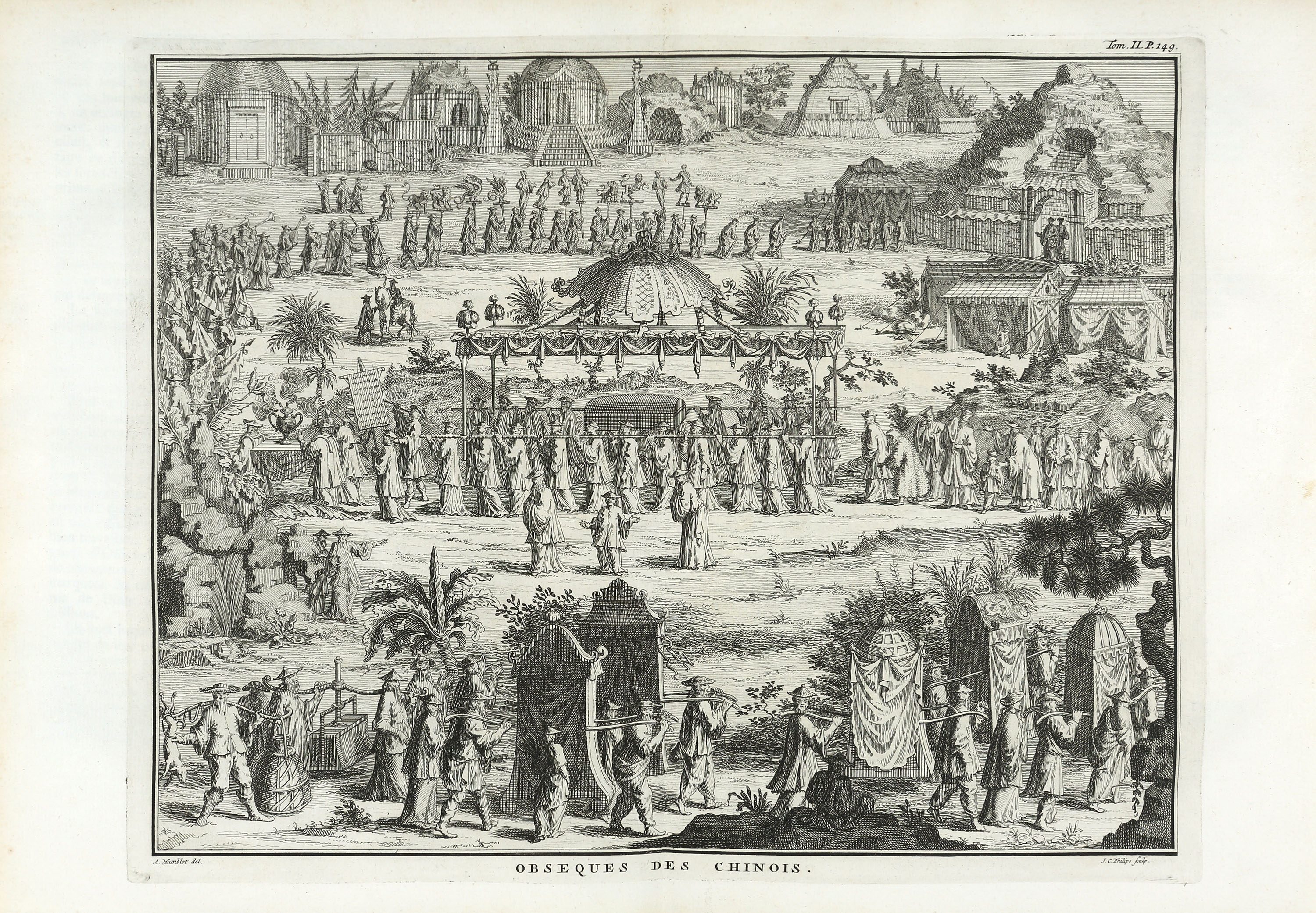
Lot 119
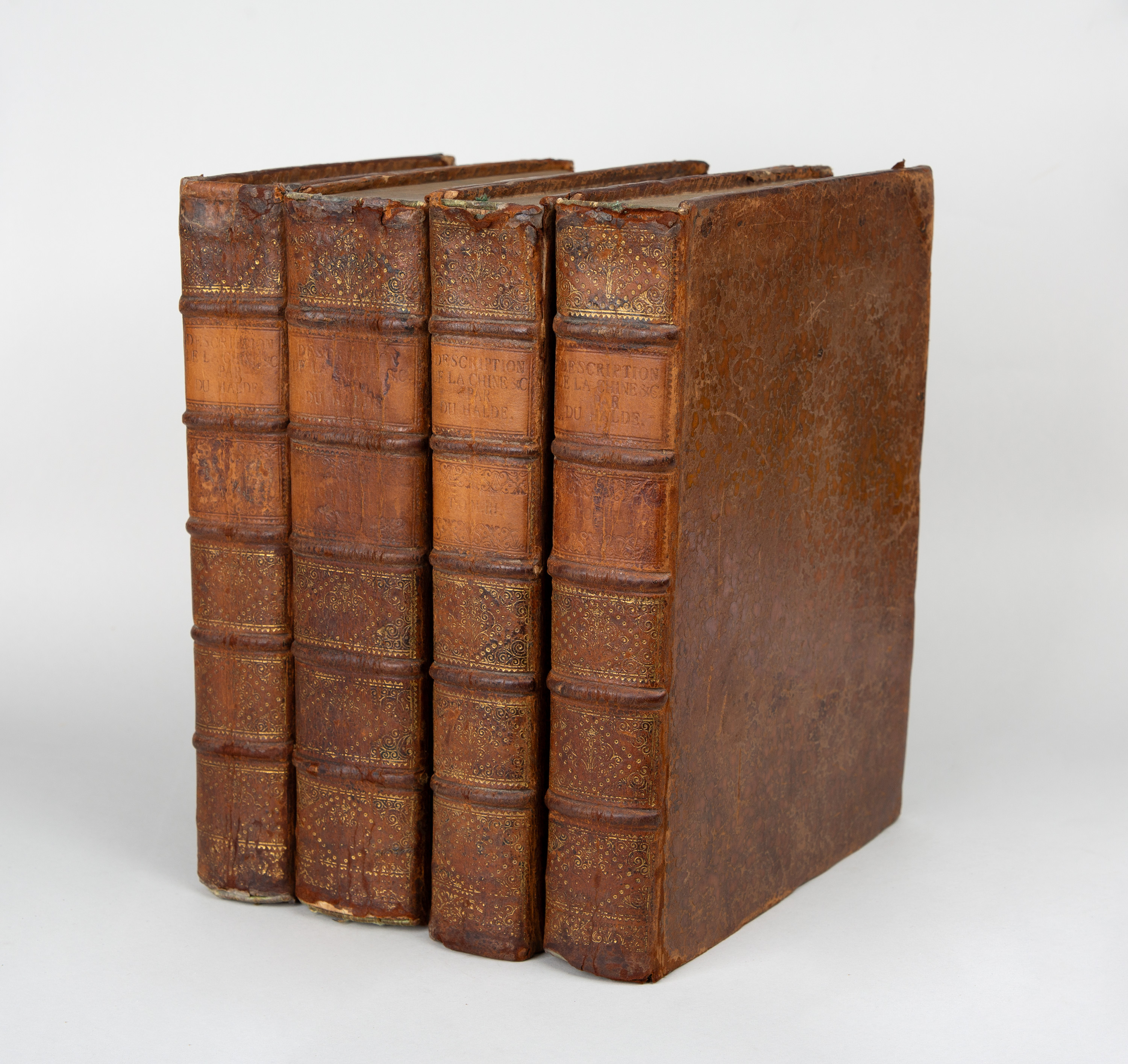
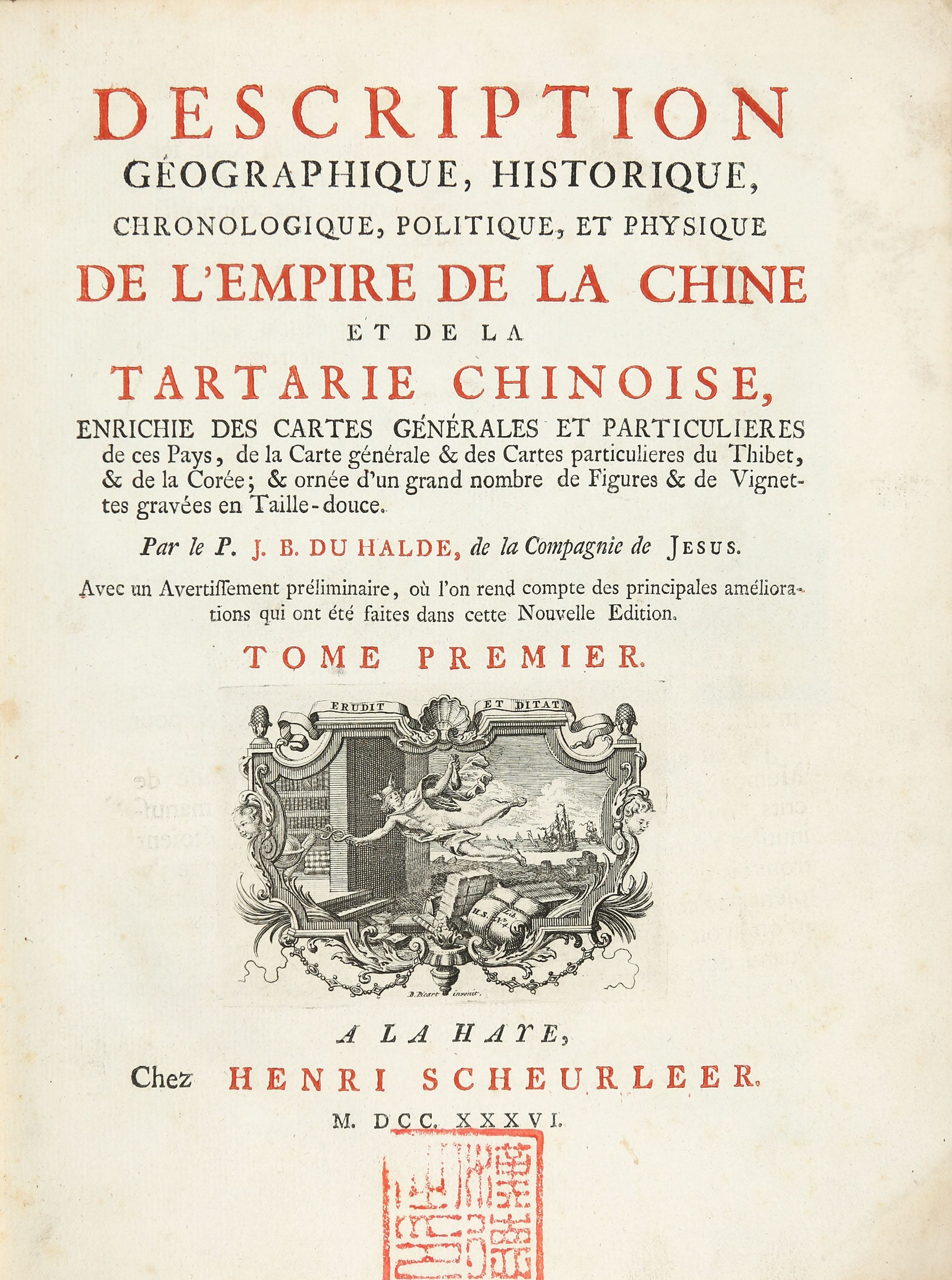
J.-B. du Halde, Description géographique ... de l'Empire de Chine. 4 Vol. Den Haag 1736.
Estimate
€ 2.000
Starting Price
€ 1.400
Hammer Price
€ 1.900
Lot:
119
Category:
Geography and work of views
Author:
Jean-Baptiste Du Halde
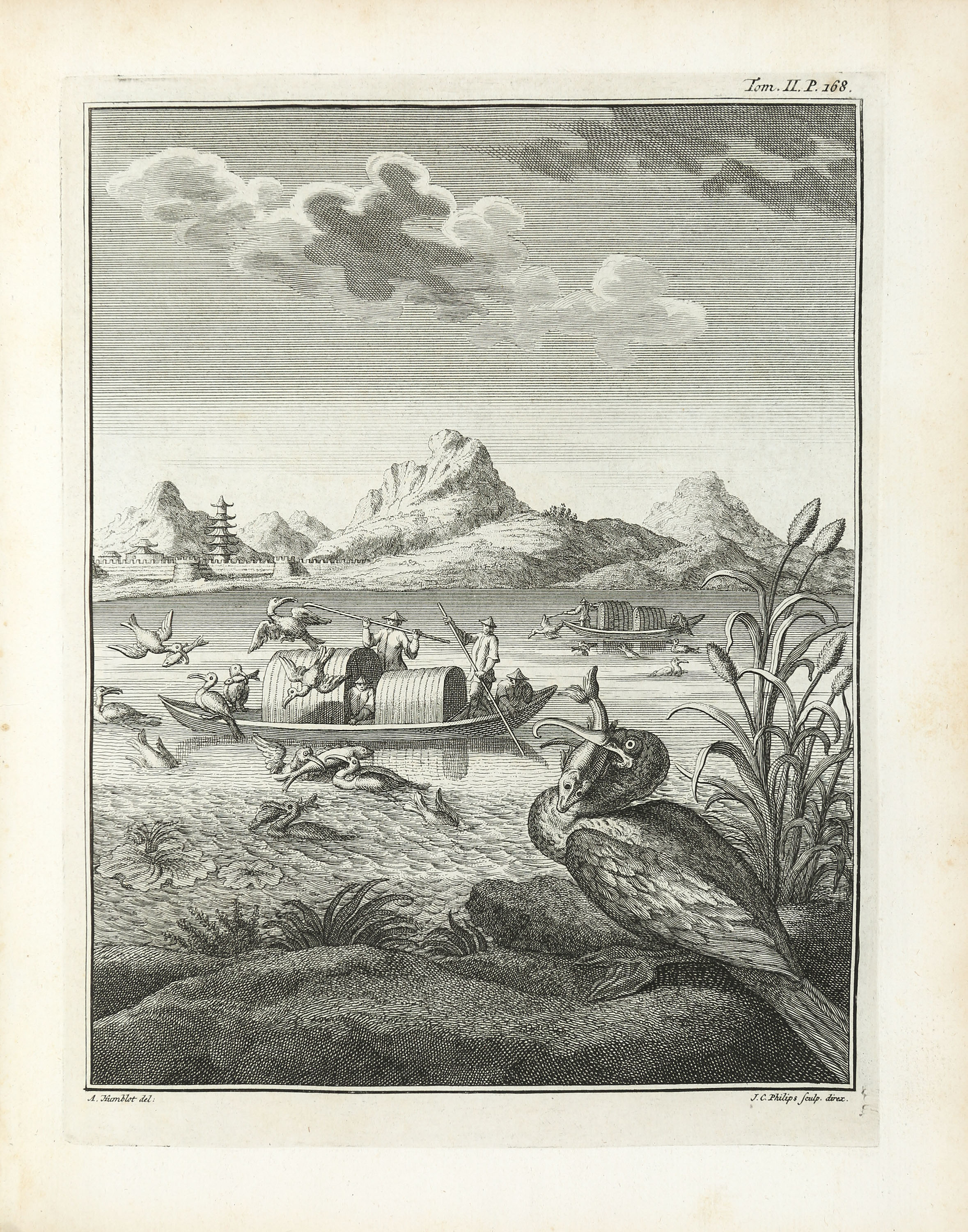
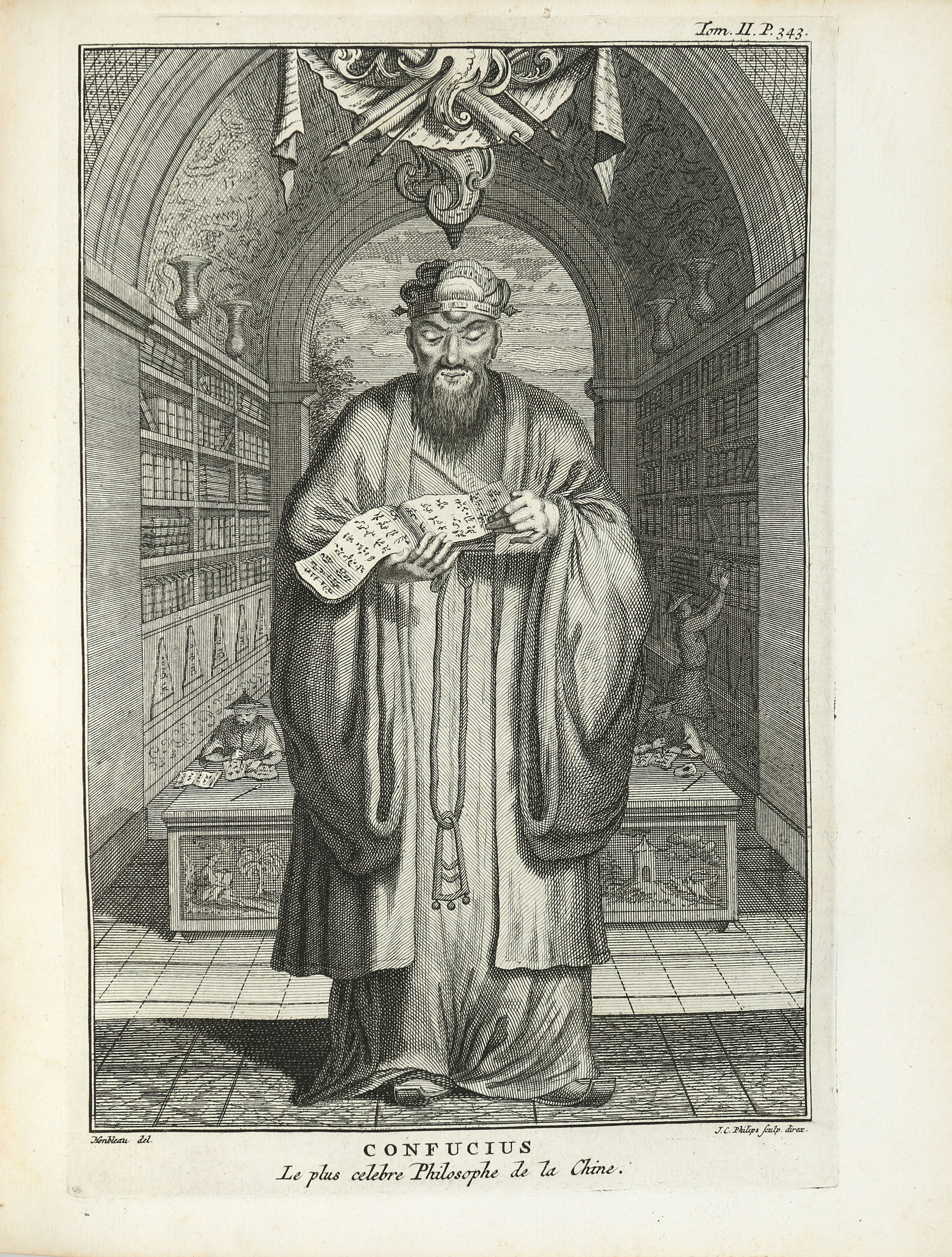
Du Halde, Jean-Baptiste: Description géographique, historique, chronologique, politique, et physique de l’Empire de la Chine et de la Tartarie Chinoise. Avec un avertissement préliminaire, où l’on rend compte des principales améliorations qui ont été faites dans cette nouvelle edition. 4 Vol. Den Haag: Henri Scheurleer 1736. 25,4 x 19,6 cm. With 4 engraved title vignettes, 53 folded or double-sheet-sized copperplate plates (4 with printed explanatory sheets) and 9 text plates. LXXX, 488 pp., 18 folios; 3 folios, 834 pp.; 3 folios, 652 pp.; 2 leaves, 344 pp. (last page paginated ‘344–368’), pp. 369–606, 64 leaves. Brown leather, 5 straps with 2 back patches and back decoration
(Scuffed and bumped; corners partially split; capitals with partially repaired cover defects; covers with scratch marks and ink stains; joints loose; binding rubbing off. Page Rr¹ in Vol. 2 has a small corner repair. Each title page bears a Chinese stamp in red. The last leaves of Vol. 1 have slight water-stains or brown spots in the lower outer corner. Slightly browned overall, with minor staining in places.)
Cordier BS 48. Löwendahl I, 398. DeBacker/S. IV, Sp. 36. - Second French edition, the first in quarto format of the ‘Bible of European Sinophilia’ (Löwendahl 394). The text is reprinted from the 1735 Paris edition, though without the maps by d’Anville included therein; these were published separately in 1737 in an atlas volume ‘pour la commodité des lecteurs’ (see the end of Vol. IV). - The author drew on the works of the Jesuit friar Martino Martini (Sinicae historiae, 1696) and Louis Le Comte (Nouveaux mémoires, 1696), as well as the reports sent home by the Jesuit missionaries in China, as the essential foundations for this monumental work. The great value of Du Halde’s description of China lies in the wealth of interesting details which gave readers in Europe an impression of the vastness of the Chinese Empire and the achievements of its people in literature, science, philosophy and the arts (cf. Löwendahl). The first volume of the work is devoted to geography and travel; the second volume deals with crafts, the arts, language, finance and imperial ordinances; the third volume describes, amongst other things, the religions of Daoism (Taoism) and Buddhism, the spread of Christianity in China and Chinese medicine; the fourth volume contains travel accounts, including those by Verbiest, Gerbillon, Golovin, Régis and Bering.
(Scuffed and bumped; corners partially split; capitals with partially repaired cover defects; covers with scratch marks and ink stains; joints loose; binding rubbing off. Page Rr¹ in Vol. 2 has a small corner repair. Each title page bears a Chinese stamp in red. The last leaves of Vol. 1 have slight water-stains or brown spots in the lower outer corner. Slightly browned overall, with minor staining in places.)
Cordier BS 48. Löwendahl I, 398. DeBacker/S. IV, Sp. 36. - Second French edition, the first in quarto format of the ‘Bible of European Sinophilia’ (Löwendahl 394). The text is reprinted from the 1735 Paris edition, though without the maps by d’Anville included therein; these were published separately in 1737 in an atlas volume ‘pour la commodité des lecteurs’ (see the end of Vol. IV). - The author drew on the works of the Jesuit friar Martino Martini (Sinicae historiae, 1696) and Louis Le Comte (Nouveaux mémoires, 1696), as well as the reports sent home by the Jesuit missionaries in China, as the essential foundations for this monumental work. The great value of Du Halde’s description of China lies in the wealth of interesting details which gave readers in Europe an impression of the vastness of the Chinese Empire and the achievements of its people in literature, science, philosophy and the arts (cf. Löwendahl). The first volume of the work is devoted to geography and travel; the second volume deals with crafts, the arts, language, finance and imperial ordinances; the third volume describes, amongst other things, the religions of Daoism (Taoism) and Buddhism, the spread of Christianity in China and Chinese medicine; the fourth volume contains travel accounts, including those by Verbiest, Gerbillon, Golovin, Régis and Bering.